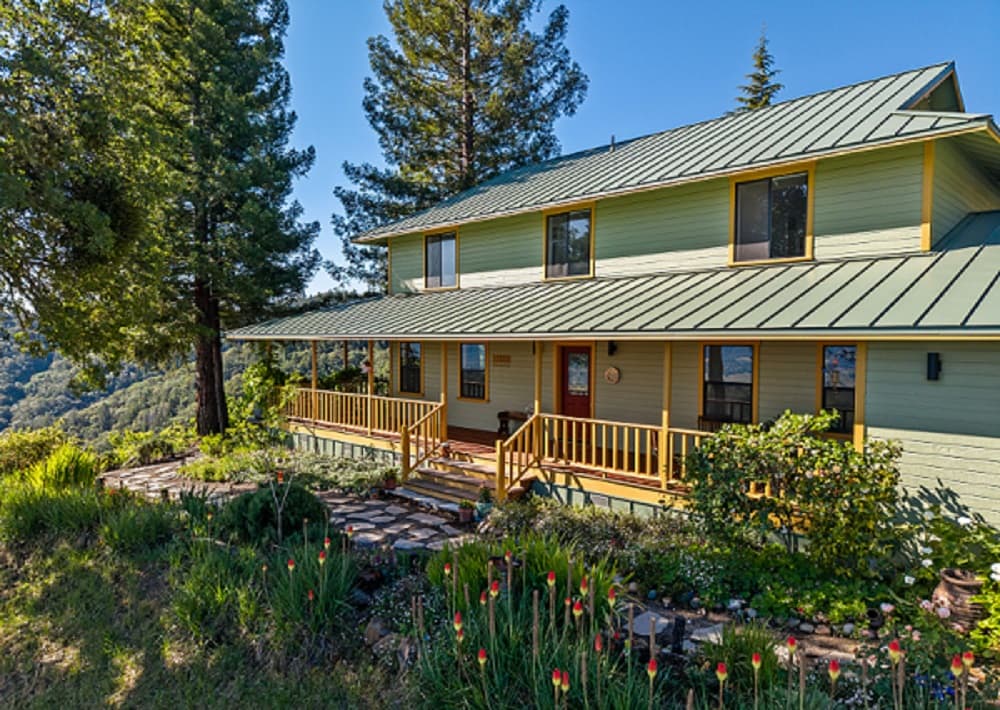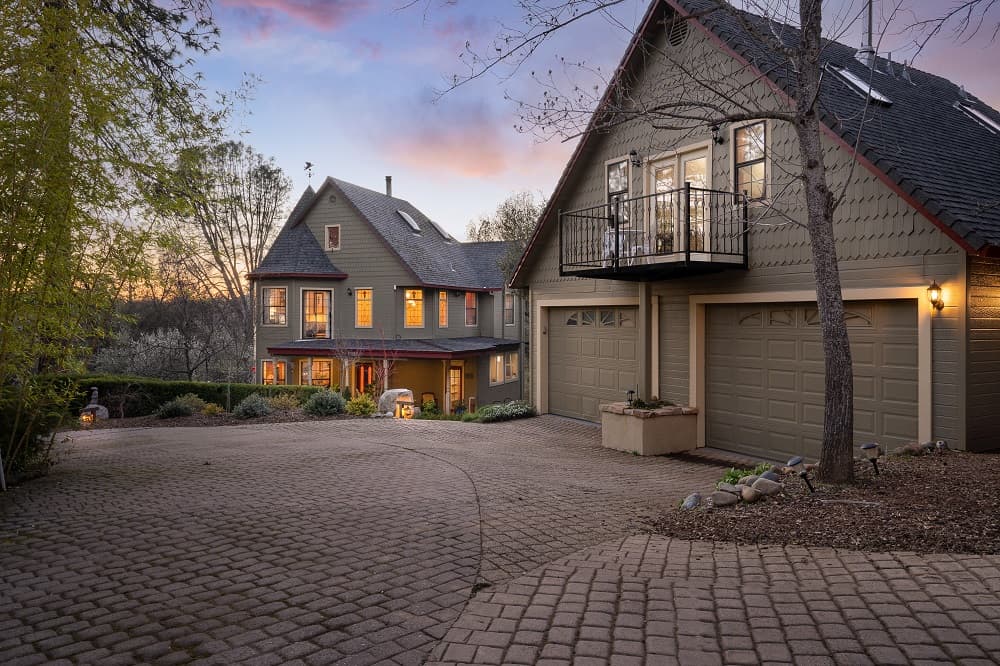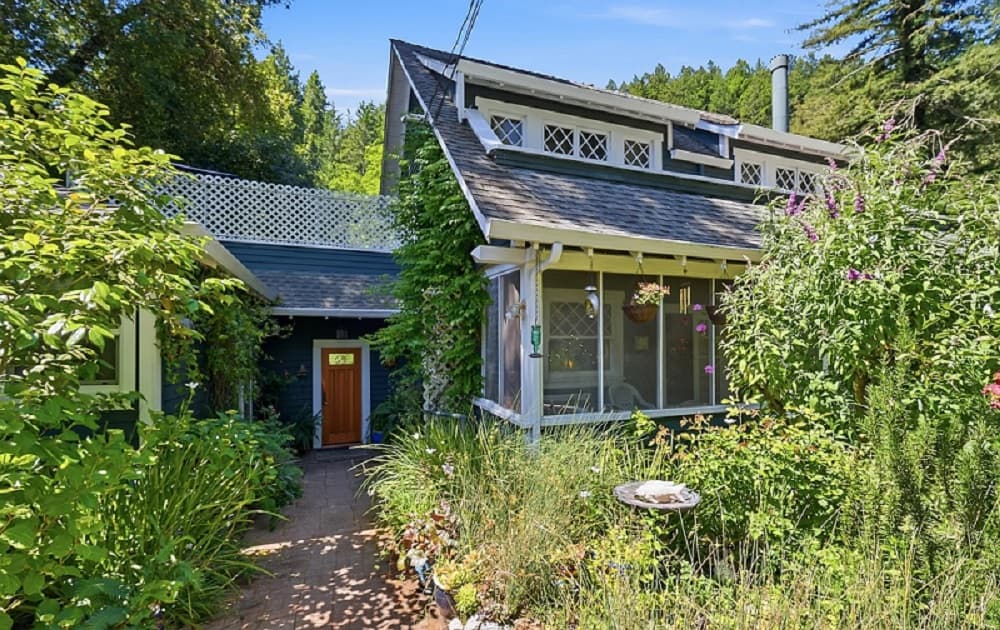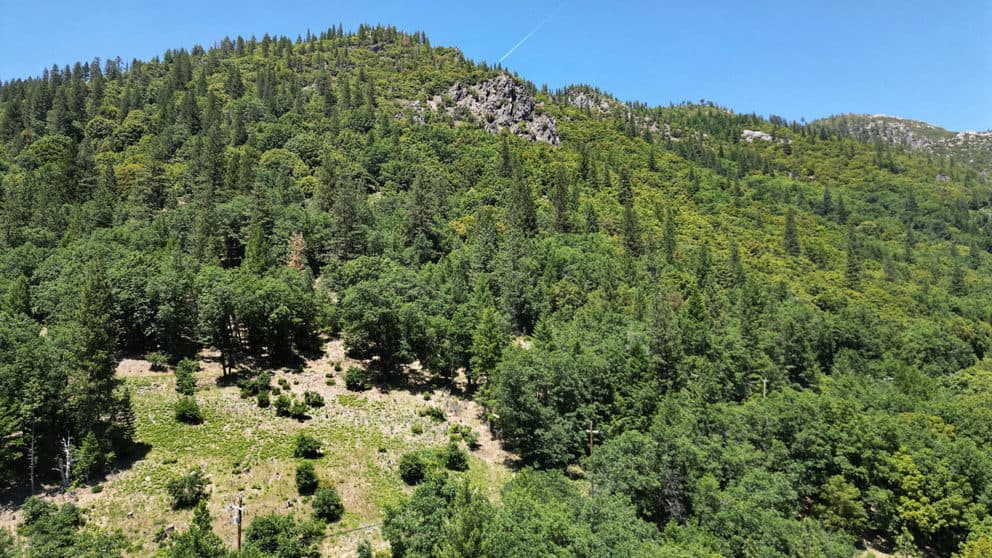
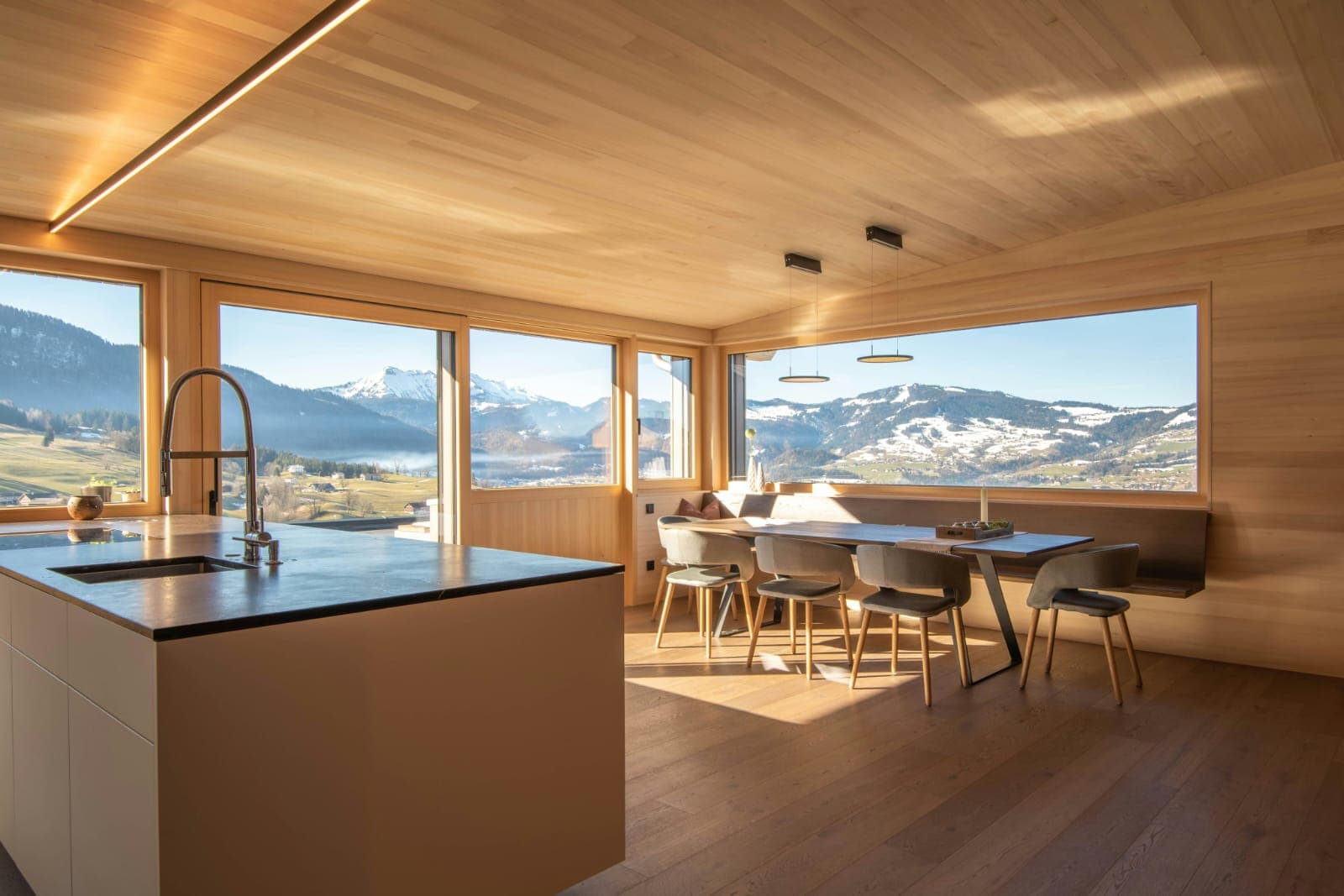
Across the Mountain West, entertaining spaces are often asked to feel comfortable after a day outside, work across seasons, and connect naturally to views, patios, fireplaces, and the materials that define the home itself.
In 2026, the strongest design ideas are about creating rooms with warmth, texture, personality, and a stronger connection to daily life. For mountain homes, that means entertaining spaces that feel grounded in the setting without leaning too heavily on rustic clichés. Here are five ideas for making a Mountain West entertaining space stand out this year.
1. Build the Room Around Warmth
Warmth is one of the most prominent directions in interiors right now, but in mountain homes, the best spaces layer color with wood, stone, leather, wool, plaster, and softer lighting.
In an entertaining space, that might mean trading flat gray tones for clay, ochre, olive, brown, cream, rust, or deeper neutrals that hold up well against mountain views. These colors can make a large great room feel more intimate, especially when paired with a fireplace, wood ceiling, or textured rug. The goal is not to make the room feel dark or heavy, but to give it enough depth to feel inviting in every season.
SUBSCRIBE TO THE HAVEN MAILING LIST
Curated homes, market intelligence and design stories — a few emails a month.
No spam. Unsubscribe any time.
2. Soften the Scale of Large Rooms
Mountain homes often have dramatic architecture: vaulted ceilings, oversized windows, exposed beams, stone fireplaces, and large open-plan living areas. Those features create impact, but they can also make entertaining spaces feel too expansive if the furniture is too rigid or spread out.
Softer shapes help bring the room back to a more human scale. Curved sofas, rounded dining tables, upholstered benches, lower lounge chairs, and layered seating areas can make a large room feel easier to gather in. A round table near a window, a curved sectional around the fireplace, or a pair of lounge chairs angled toward the view can change the mood without changing the architecture.
3. Let Natural Materials Do the Work
In mountain homes, natural materials do not need to be overexplained. Wood, stone, linen, wool, leather, iron, plaster, and handmade ceramic already belong in the setting. The stronger design move is to use them with restraint, so the room feels elevated rather than themed.
A stone fireplace, wood-paneled ceiling, built-in bar, plaster wall, or custom shelving can give an entertaining space architectural weight. Smaller details, such as a wool throw, linen upholstery, leather chair, or vintage wood table, can add texture without clutter. The key is to let materials carry the character of the room instead of relying on obvious mountain motifs.
4. Make Indoor-Outdoor Entertaining Work Year-Round
Outdoor connection is central to mountain living, but the best entertaining spaces should work across the calendar, with indoor rooms that open easily to decks, terraces, outdoor fireplaces, heated patios, or covered dining areas.
In the Mountain West, the seasons are part of the experience. A great entertaining space might face a view in the warmer months and turn toward the fireplace in winter. Large doors, covered outdoor rooms, integrated lighting, durable materials, and flexible seating can help the home move between indoor and outdoor gathering without making either space feel secondary.
5. Add Personality Without Turning the Home Into a Theme
The most memorable entertaining spaces feel collected, not staged. Local art, landscape photography, vintage lighting, books, handmade textiles, sculptural objects, or a few pieces tied to skiing, fishing, riding, or hiking can bring character without overwhelming the space. In mountain homes, a room can nod to the mountain lifestyle while still feeling refined and personal.