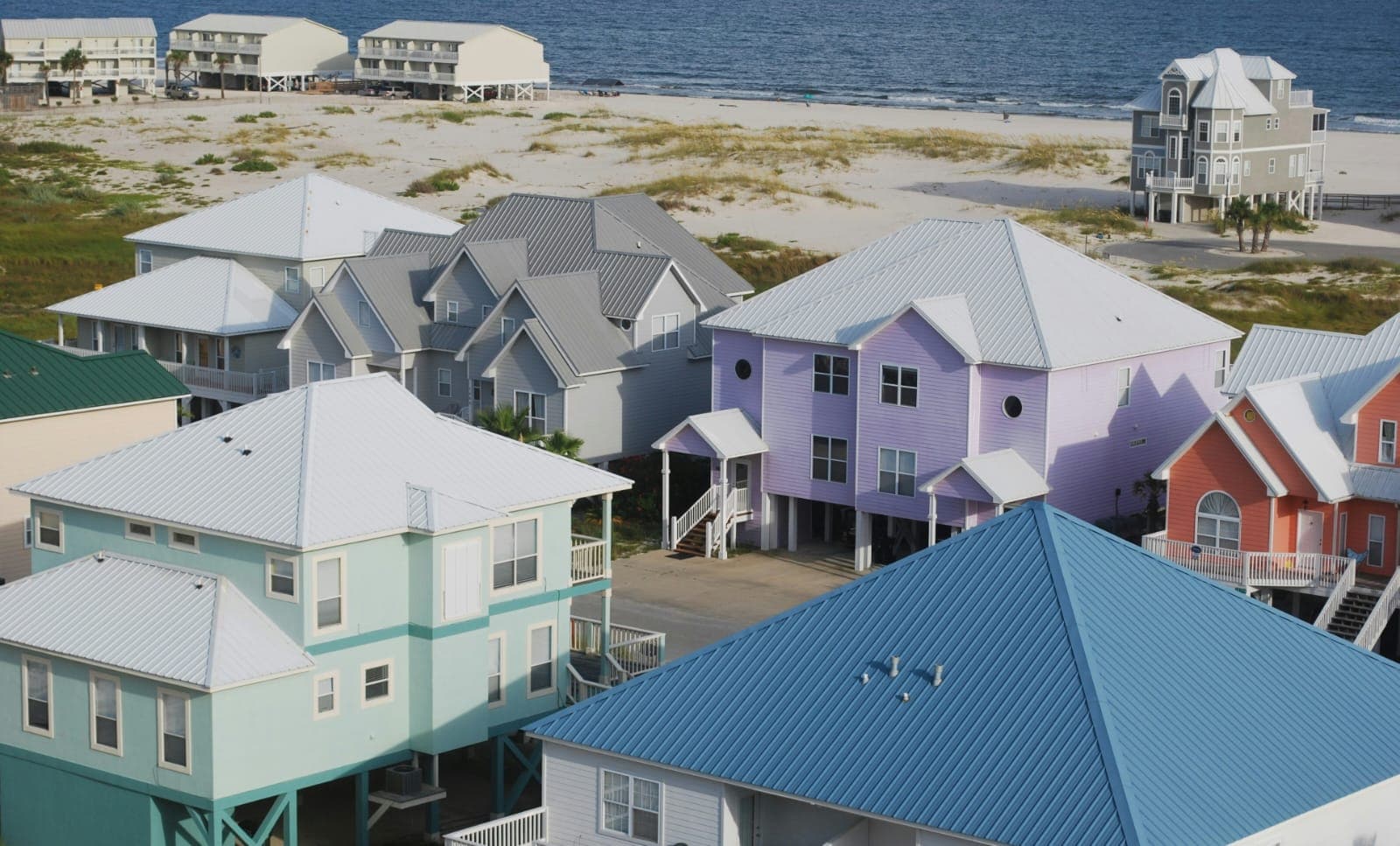
Gulf Shores, AL
The Gulf Coast continues to attract attention for reasons that extend beyond seasonality. Across Alabama and Mississippi, attention has remained concentrated on communities with water access and established town centers. The year was defined by selectivity—buyers gravitating toward places with durable appeal and long-term livability.
Often referred to as the “Third Coast,” the region offers a distinct alternative to larger coastal markets, shaped by boating culture, walkable town centers, and a lower-density lifestyle tied closely to the water.
Alabama’s Coastal Corridor: Orange Beach and Gulf Shores
Orange Beach and Gulf Shores are among Alabama’s best-known coastal markets, shaped by condo living, beach access, and boating culture. The area boasts easy access to the Gulf, walkable pockets near dining and retail, and year-round activity by the water.
Gulf Shores has followed a parallel path, with public-facing improvements and redevelopment reinforcing its role as both a resort destination and a residential community. Interest has increasingly extended beyond short-term use, with more buyers considering full-time or extended stays, particularly in neighborhoods removed from peak tourism corridors.
SUBSCRIBE TO THE HAVEN MAILING LIST
Curated homes, market intelligence and design stories — a few emails a month.
No spam. Unsubscribe any time.
Fairhope: Consistency Over Expansion
Located above Mobile Bay, Fairhope continues to stand apart for its established neighborhoods and carefully maintained downtown. Development remains measured, with an emphasis on preserving architectural character and public space rather than introducing large-scale projects.
Fairhope’s market has been defined by stability—appealing to buyers who prioritize setting, community, and long-term ownership over short-term appreciation.
Mississippi’s Coast: Ocean Springs and Biloxi
East of the state line, Ocean Springs continued to build on its reputation as one of the Gulf Coast’s most culturally active small cities. Its downtown—anchored by local galleries, restaurants, and shaded streets—has drawn buyers interested in a compact, walkable lifestyle with coastal access. Ocean Springs’ newer growth sits alongside a downtown identity built around galleries, restaurants, and a walkable core.
In Biloxi, resort and casino development remains central, alongside ongoing city projects and waterfront-related planning, particularly for buyers seeking proximity to the coast with comparatively accessible pricing. Activity in 2025 reflected a more balanced pace, with buyers weighing value and location over rapid gains.
Pass Christian and Bay St. Louis: Quiet Coastal Alternatives
For buyers drawn to lower density and architectural heritage, Pass Christian and Bay St. Louis remained compelling options. Pass Christian is defined by mature landscaping and a restrained development profile that continues to limit supply. Properties here tend to appeal to buyers seeking privacy and permanence rather than visibility.
Bay St. Louis offers a more eclectic counterpart, blending small-town scale with an active arts and dining scene. Development in 2025 focused on incremental growth—custom homes and modest infill projects that respect the town’s existing fabric while updating waterfront infrastructure.
Looking Toward 2026
For 2026, interest continues to cluster in towns with a clear identity—water access, walkability, and durable character. While the pace of appreciation has moderated from earlier peaks, interest in the Gulf Coast lifestyle—particularly among buyers seeking space, climate, and long-term use—continues to shape activity.