Boston, MA
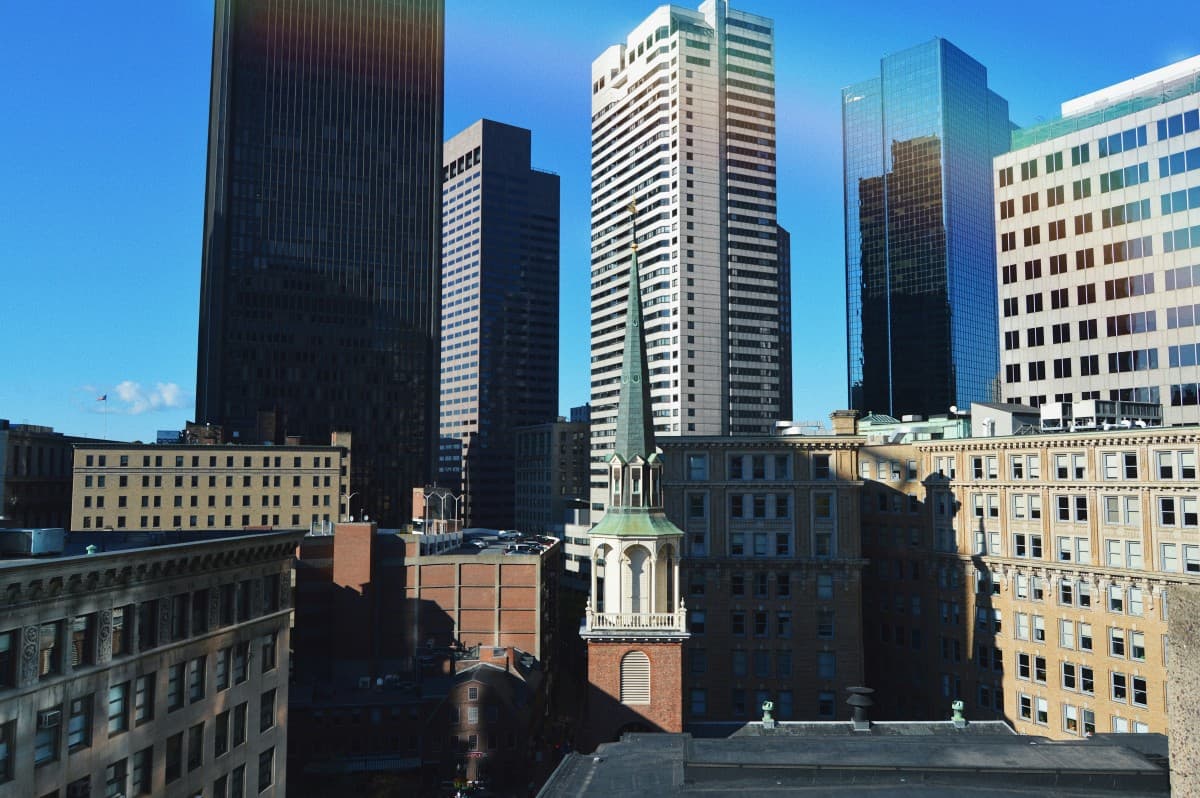
For much of the last half-century, Boston’s core involved crowded sidewalks at lunch, bright office lobbies at 9 a.m., then a noticeable hush after business hours. This year, that pattern is softening because more people are beginning to live there—often in former office buildings now being repositioned for housing. The result is a downtown that functions more like a neighborhood, with a fuller daily rhythm and a more resilient mix of activity.
The Policy Lever Behind the Shift
Boston’s Office-to-Residential Conversion Program is one of the clearest mechanisms behind the shift. Boston’s Office-to-Residential Conversion Program is one of the clearest mechanisms behind the shift. In a December 2025 update, the City of Boston said it had received 22 applications across 27 buildings that would add 1,517 new homes downtown, including 284 income-restricted units, and that applications are open through the end of the year. To help make these projects pencil out, the city offers a major long-term property tax break for qualifying conversions—an incentive meant to encourage owners to turn older office buildings into places where people can actually live.
Together, those policies are helping downtown add housing near transit, the waterfront,
SUBSCRIBE TO THE HAVEN MAILING LIST
Curated homes, market intelligence and design stories — a few emails a month.
No spam. Unsubscribe any time.


A New Definition of Proximity
Downtown living has always been about closeness, but what “close” means is evolving. When offices anchored daily life, you could walk to work. In a hybrid era, proximity is less about your desk and more about your day. Living near Downtown Crossing, the Financial District, or the edges of the Waterfront can mean stepping out for dinner without planning logistics, catching a performance, meeting friends spontaneously, or turning errands into a walkable loop—while still being close to Back Bay, the South End, Cambridge, or Logan.
This is where conversions have an outsized effect. A modest increase in full-time residents can change how ground-floor retail performs, how late cafes stay open, and how consistent foot traffic feels on weekdays versus weekends. Downtown doesn’t need to become a nightlife district to feel alive; it needs enough residents to make normal neighborhood habits visible on the street.
What Conversions Get Right—And Where They Can Fall Short
Converted office buildings often deliver the qualities buyers and renters struggle to find in new construction: higher ceilings, oversized windows, and a lasting architectural presence. Many older commercial structures have the kind of structural straightforwardness—and, in some cases, historic detailing—that reads as authentic rather than newly packaged.
But the best projects are also the most technically honest. Office floor plates weren’t designed for residential light-and-air needs, and not every layout translates gracefully. Sound separation, mechanical systems, and plumbing stacks can make or break livability, and sophisticated buyers pay attention to those “invisible” upgrades as much as finishes. Even the program’s success story comes with a realistic caveat: industry coverage has noted that, while Boston has approved numerous projects, fewer have reached construction or completion so far—an important reminder that conversions are slow, capital-intensive work.
A Downtown Shaped by Micro-Neighborhoods, Not One Monolith
The most convincing version of downtown’s residential future is a patchwork of adjacent districts that offer different lived experiences. The Financial District and Downtown Crossing lean into transit-first convenience and dense walkability, with the kind of “everything is five minutes away” energy that suits people who want minimal friction. Fort Point continues to read as more textural and loft-adjacent, where older building stock and a creative-commercial mix give the streetscape a different tone. And the Seaport edge—closer to newer construction and waterfront amenities—functions as a polished extension that some buyers treat as downtown’s modern counterpart.
Who Downtown Is Starting to Work For
The emerging downtown resident this year falls into several overlapping categories. There are frequent-travel professionals who want a lock-and-leave home base, empty nesters trading yard work for walkability, and hybrid workers who’d rather be close to transit and culture than tied to a daily commute. There’s also a quieter segment that tends to show up in global cities: households using Boston as a part-time base who value downtown’s access more than they value extra square footage.
Conversions make these choices more realistic, not because they invent demand, but because they expand the set of livable options in a part of the city that previously didn’t offer many.
The Compounding Effect
Downtown Boston’s residential awakening is, at heart, a compounding story. More residents support more consistent small-business demand, which supports a more reliable street-level experience, which makes downtown feel easier to live in, which draws more residents. The City of Boston’s own numbers—1,517 homes in the application pipeline, with the program extended through the end of the year—signal that the city is betting on that flywheel.