Duluth, MN
Fall arrives in stages along Minnesota’s North Shore. Inland maples across the Sawtooth Mountains typically reach peak color first, from late September into early October, while birch and aspen closer to Lake Superior follow later. The 154-mile North Shore All-American Scenic Drive runs from Duluth to Grand Portage through that changing landscape, with eight state parks along the route.
Seasonal events offer additional stops along the way. Art Along the Lake runs September 25 through October 4 from Tofte to Grand Portage and the Gunflint Trail, opening studios and galleries across Cook County for a 10-day tour. Farther south, Duluth is the region’s largest city and a natural starting point before the communities become smaller and more closely tied to the lake, forest, and ski terrain.
Duluth
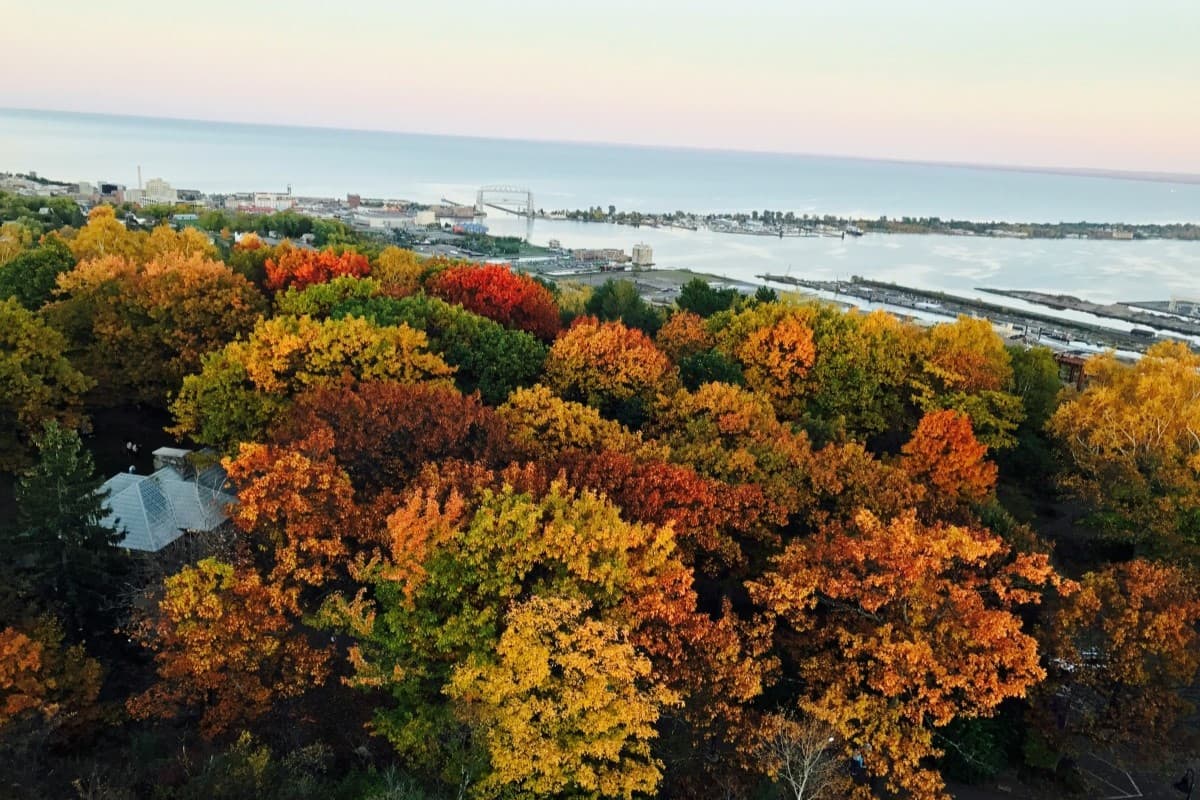
In Duluth, Lake Superior and the active port remain visible from the hillside, while the Aerial Lift Bridge continues to open for commercial vessels entering and leaving the harbor. Canal Park occupies the waterfront below neighborhoods that climb sharply above the lake.
The city is dotted with older architecture. Glensheen, the 39-room Congdon family mansion on London Road, sits on a 12-acre lakefront estate and remains open for tours. Elsewhere, established neighborhoods such as Congdon Park and Lester Park place residential streets close to the lake, parks, and trails without separating them from the rest of the city.
Of the four communities listed here, Duluth is also the most year-round. Restaurants and shops extend well beyond Canal Park, including the Lincoln Park Craft District west of downtown, while the city’s healthcare facilities, schools, and employment base operate on a different scale from the smaller communities farther up Highway 61.
SUBSCRIBE TO THE HAVEN MAILING LIST
Curated homes, market intelligence and design stories — a few emails a month.
No spam. Unsubscribe any time.
Two Harbors
Two Harbors remains tied to Lake Superior through its harbor and ore docks, but residential streets, schools, shops, and everyday services sit only a few blocks inland. It is close enough to Duluth for the two places to remain connected, while marking the point where Highway 61 begins to feel more distinctly like the North Shore.
Just beyond town, Gooseberry Falls State Park begins a succession of public lands along the lake. The Minnesota Department of Natural Resources ranked Gooseberry Falls as the state’s most visited state park in 2024, with over 758,000 visitors. Split Rock Lighthouse and Tettegouche State Park continue farther northeast.
Two Harbors therefore has much of the scenery associated with more remote sections of the shore while remaining within relatively easy reach of Duluth.
Lutsen
Around Lutsen, the shoreline rises into the Sawtooth Mountains. The elevation difference is especially noticeable in fall, when inland maples can turn before the birch and aspen closer to Lake Superior. The area’s properties include cabins, condominiums, and detached homes near ski terrain, forest, and Lake Superior.
The Summit Express Gondola at Lutsen Mountains remains one of the most direct ways to see that geography. This year, it is scheduled to operate daily through October 18, with additional operating dates on October 24 and 31, traveling from the base area across the Poplar River valley to Moose Mountain.
Grand Marais
Grand Marais has developed a cultural presence disproportionate to its size. Founded in 1947, the Grand Marais Art Colony is Minnesota’s longest-lived art colony. Its studios are part of a broader concentration of galleries, makers, and craft organizations around the harbor. The community is particularly visible this fall. Art Along the Lake includes studios across Grand Marais, the Gunflint Trail, and other parts of Cook County through October 4.
The food scene is similarly tied to the lake and region. Angry Trout Cafe, located in a former commercial fishing shanty on the harbor, builds much of its menu around Lake Superior fish, regional wild rice, and locally grown produce.
Grand Marais also marks the start of the Gunflint Trail, a 57-mile paved route northwest toward the Boundary Waters, making the town work as both a Lake Superior community and an entry point to a much larger inland wilderness.
The Superior Hiking Trail at 40
The trail connecting much of the North Shore landscape has its own milestone this year: the Superior Hiking Trail is marking its 40th anniversary. Formed in 1986, the association now oversees a 300-mile trail extending from the Minnesota–Wisconsin border to near the Canadian border.
Along the North Shore, the trail repeatedly leaves Highway 61 for ridgelines, river valleys, cliffs, and inland forest. Sections around Gooseberry Falls, Silver Bay, Lutsen, and Grand Marais can all be approached as day hikes rather than long-distance trips.
The timing of fall color can vary across short distances because inland elevations cool sooner than the shoreline. A hike above the lake can therefore look noticeably different from the forest directly beside it during the same week.
Living Along the North Shore
Real estate activity becomes much thinner in Lutsen and Grand Marais than in Duluth. Redfin recorded three Lutsen sales and four Grand Marais sales in August. With samples that small, a handful of closings can move monthly medians sharply, making individual property characteristics and longer time periods more informative than a single month’s percentage change.
That also helps explain why the North Shore is difficult to summarize as one residential market. A house in Duluth, a home near Two Harbors, a Lutsen condominium, and a property outside Grand Marais may all sit along the same Lake Superior corridor, but buyers encounter very different markets from one community to the next.