Miami Beach
Written by Breck Hapner
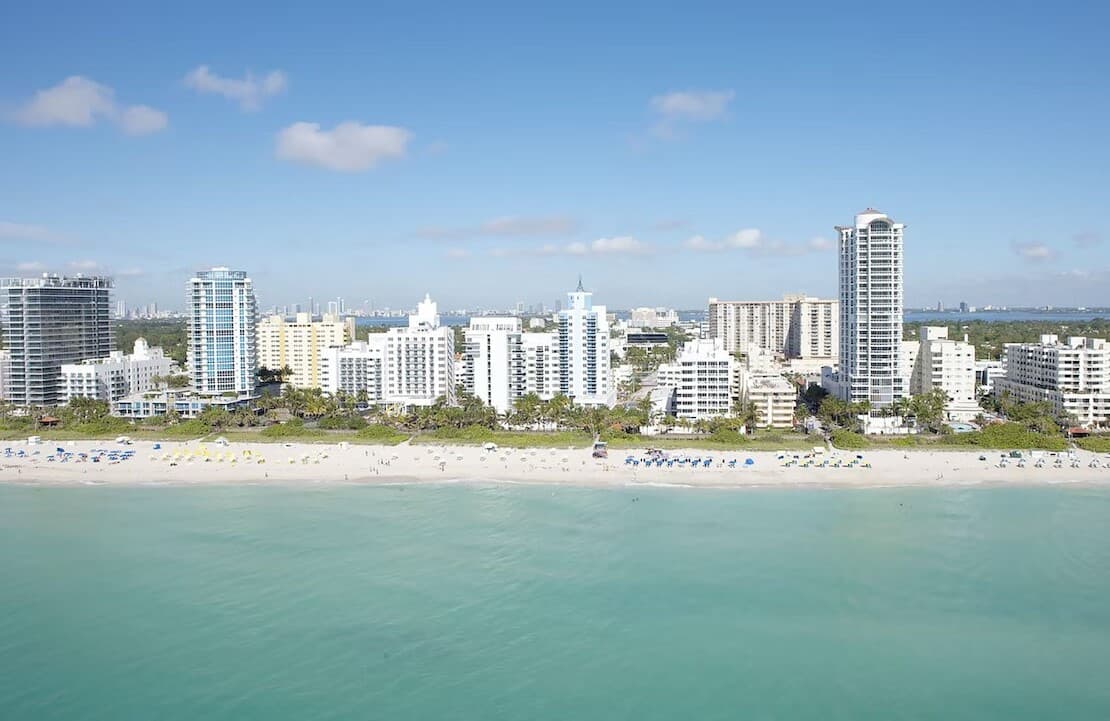
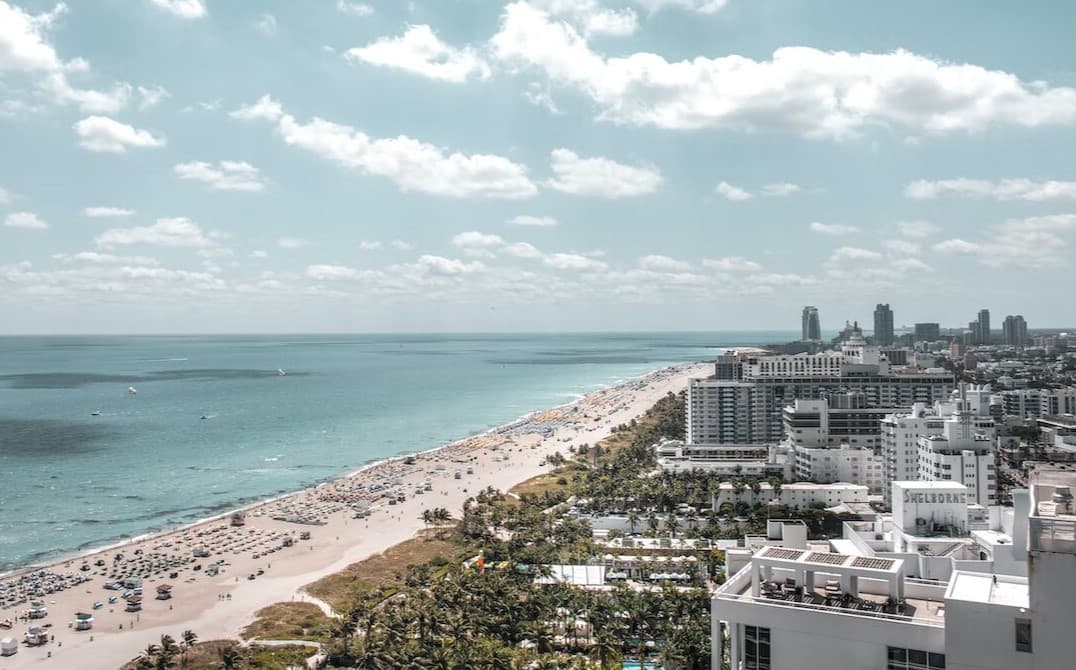
There is a rising tide threatening America’s coastal real estate, brought on by the damaging effects caused by global warming. Miami is often seen as ground zero for the impacts of climate change, which is now radically affecting one of the most expensive real estate markets in the world.
Because Miami sits so close to sea level, it’s also one of the first cities expected to lose some of its most valuable real estate due to rising waters. Current simulations by climate scientists show a scenario in which the expected sea level rise could be 10-12 feet by the year 2100. This is in addition to ancillary damage caused by other extreme weather events generated by global warming. Risk Finder recently reported that Miami has more than 120,000 properties at risk.
According to experts, water levels have risen six to eight inches in the past 20 years, and many homeowners are now taking measures to elevate their properties from the current ground level. But residents with homes at risk are living each day with one mounting irony: If the street is filled with saltwater, what difference does the height of the house make? For example, Alton Road, the busiest street in Miami’s South Beach, was recently flooded with nearly two feet of water during high tide.
Business Insider reported in 2018 that both the state government and the city of Miami have invested millions of dollars into installing pumps, raising streets and sidewalks, and more to try and keep the waters at bay. That being said, homeowners are growing apprehensive. Home values in Miami are starting to sink, decreasing nearly seven percent since 2021. An estimated 25 percent of the properties are currently up for sale solely due to climate change concerns, creating a significant impact on the real estate market.
Seemingly, for many investors and potential buyers, the only viable solution is building and settling on higher ground. If such measures are required, what are some of the current climate-related issues Miami is facing?
SUBSCRIBE TO THE HAVEN MAILING LIST
Curated homes, market intelligence and design stories — a few emails a month.
No spam. Unsubscribe any time.
What Is Going On?
Climate change refers to the long-term changes in the Earth’s climate, including temperature, precipitation, and sea level. These changes are primarily caused by human activities, such as the burning of fossil fuels and deforestation.
Climate change is causing sea levels to rise in several ways, but the most significant is the melting of ice sheets and glaciers, which adds water to the oceans. Additionally, as the oceans warm, they expand, which also contributes to sea level rise.
Overall, climate change is having a negative impact on coastal real estate, and it is important for Miami buyers, sellers, and developers to consider the potential risks when making decisions about coastal properties.
Miami Beach
What Does The Data Say?
There is a growing body of data and research on the impact of climate change and sea level rise on coastal real estate, including luxury properties in Miami. Studies have shown that rising sea levels and increased frequency of coastal flooding are already having an impact on property values in Miami and other coastal cities. Additionally, research suggests that properties in low-lying areas are at a higher risk of flooding and may experience a decline in value as a result.
One source of data is from the National Oceanic and Atmospheric Administration (NOAA), which has been monitoring sea level trends for several decades. Their 2022 Sea Level Rise Technical Report data shows that the East Coast sea level has risen about 10 inches (25 cm) over the last century, which is in line with the global average sea level rise. This data also indicates that the rate of sea level rise has accelerated in recent years.
Another source of data is from the Intergovernmental Panel on Climate Change (IPCC), which produces comprehensive assessments of the state of the climate. The IPCC’s 2021 assessment report, “Sea Level Rise and Implications for Low-Lying Coasts” projected that global sea levels could rise by 0.2 to 2 meters (0.7 to 6.6 feet) by the end of this century.
In 2021, CBS News reported that Researchers from the University of Miami have projected that sea levels have been rising almost two feet per century and could put downtown Miami underwater in a few decades. According to their study, by the year 2060, nearly 60 percent of Miami-Dade county will be submerged.
Another study by First Street Foundation in their 2020 First National Flood Risk Assessment, slides 39 and 40, found that 1,833,300 properties are facing a substantial flood risk. The next 30 years will experience an 18.6 percent increase bringing the total number of properties at risk to 2,174,400.
Moreover, another study by the Union of Concerned Scientists in 2018 found that the sea level in Miami is projected to rise by 1.8 to 2.5 feet (0.6 to 0.8 meters) by 2060 and by 3.3 to 4.9 feet (1 to 1.5 meters) by 2100 under a “business as usual” emissions scenario, which would lead to increased flooding and damage of coastal infrastructure and property.
According to a study by Zillow, it was found that luxury homes in Miami Beach and other low-lying areas of Miami-Dade County are at risk of losing value due to rising sea levels caused by climate change. The study estimates that by 2100, as much as $400 billion in home value could be at risk in Miami-Dade County alone.
The principal concerns are presently flooding and storm damage. Basically, how do these two factors affect Miami real estate?
Miami Beach
Flooding
Miami is particularly vulnerable to sea level rise due to its low-lying geography and the fact that much of its development has taken place on reclaimed land. As sea levels continue to rise, properties in Miami are at increased risk of flooding and storm damage.
Heavy rain or high tide flooding in low-lying areas can cause damage to buildings and infrastructure, making properties less desirable and less valuable. This can also make it more difficult for investors and homeowners to obtain financing or insurance for their properties.
Additionally, flooding can make certain areas of the city less accessible, which can also negatively impact property values.
Miami Beach
Storms
Another impact of sea level rise on the Miami real estate market is the increased risk of storm damage. As sea levels rise, storm surges become more powerful, which can also cause significant damage to buildings and infrastructure, reducing salability and value while raising insurance and financing rates.
For instance, as sea levels have risen in Miami, local governments have begun to change zoning laws, building codes, and land use policies, imposing new regulations to protect properties from flooding and storm damage. These acts, in turn, make it more expensive to develop new properties or renovate existing ones.
This is not to downplay the role global warming has on producing all types of extreme weather events, including hurricanes. After several successive devastating storms in the last two years, home buyers and real estate investors are becoming more hesitant to invest in coastal areas due to the increasing risk of flooding and storm damage.
Miami Beach
What Do Investors/Realtors Say?
Realtors in Miami have reported that luxury properties in the area are being affected by climate change and rising sea levels in several ways.
Realtor.com reported that buyers are becoming more cautious and are starting to ask more questions about the properties’ vulnerability to flooding and storm damage. They are increasingly looking for properties that are elevated or located in areas that are less likely to flood.
Additionally, some realtors have reported that luxury properties located in areas that are at a lower risk of flooding and storm damage are becoming more desirable as a result of sea level rise. This could lead to an increase in prices for these properties.
Furthermore, according to WUSF Public Media, realtors have reported that some luxury property developers and investors are starting to focus more on developing properties further inland, in addition to those that are designed to be more resilient to sea level rise, such as by building on stilts or elevating buildings.
Miami Beach
The Future
In order to mitigate the many impacts caused by climate change, Miami must take proactive steps to protect its properties and infrastructure, such as investing in flood protection measures, implementing zoning and building codes that take sea level rise into account, and planning for future sea level rise.
As the sea level continues to rise, the risk of flooding and storm damage will also increase, which could further impact the value of coastal real estate in Miami. It is important to note that these studies are only projections, but it is imperative to take into account the long-term effects of climate change on real estate decisions.
It is clear that climate change and rising sea levels are a significant risk to coastal real estate, including luxury properties in Miami, and it is important for homeowners, buyers, and investors to consider the potential long-term effects of climate change when making decisions about coastal properties.
As always, stay tuned to Haven for further global warming & real estate articles and insights.