Tucson, AZ
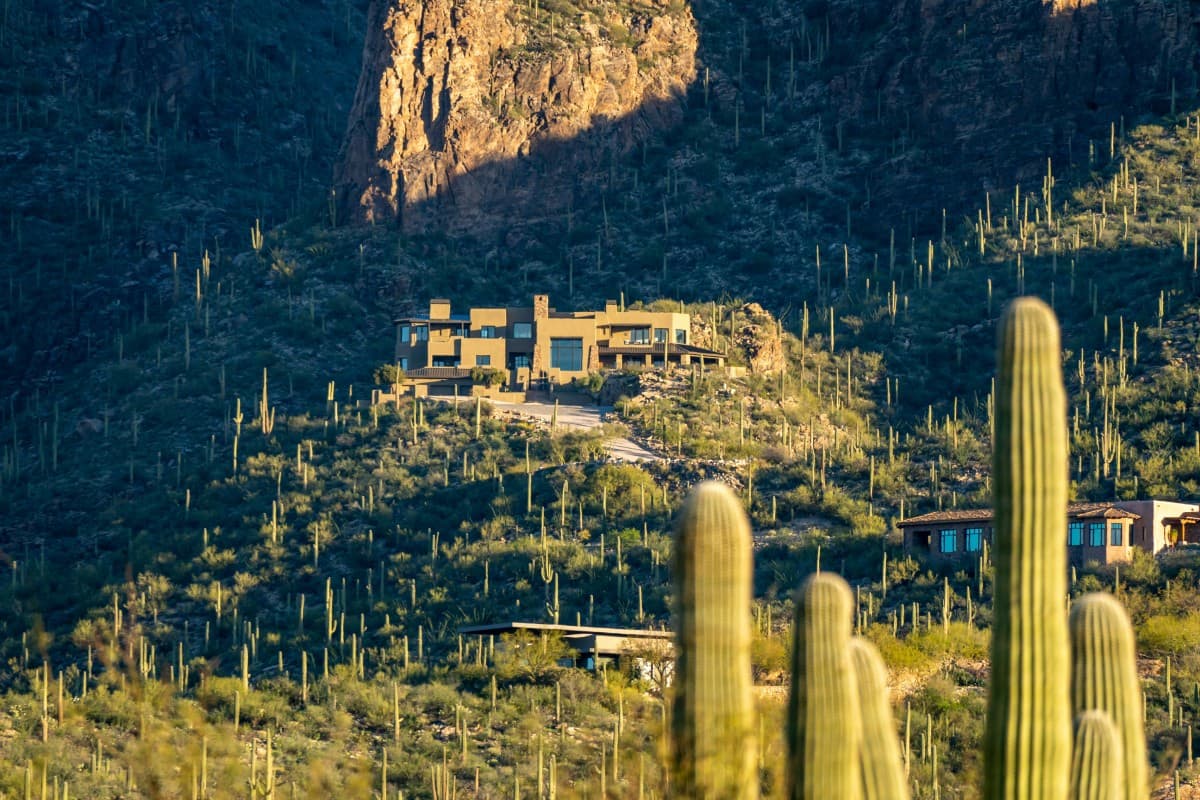
Across the Southwest, desert modern architecture increasingly emphasizes conversing with the landscape: calibrating lines, textures, and massing to reflect—not dominate—the desert.
From Geometry to Gentle Forms
Early desert modernism often emphasized clean geometry and bold structural lines that contrasted the landscape, whereas today’s architects increasingly favor organic contours and softer integration.
These designs are not purely aesthetic: curved walls or recessed volumes help modulate sunlight and thermal gain. Rather than confronting the terrain, structures increasingly integrate with it—nestling into slopes or orienting massing to shield interiors from harsh afternoon sun.
SUBSCRIBE TO THE HAVEN MAILING LIST
Curated homes, market intelligence and design stories — a few emails a month.
No spam. Unsubscribe any time.
Materials That Speak the Desert
Material choices are central to this evolution. Today’s desert modern homes frequently employ rammed earth, textured stucco in sand tones, and weathered steel accents. These materials echo the region’s palette and stand up to its extremes.
In arid regions with large day-night temperature swings, rammed earth offers excellent thermal stability, absorbing heat by day and releasing it overnight. Sand-hued stucco blends façades into desert vistas. Steel elements — patinas of rust and iron — mirror the soil’s mineral tones, maturing elegantly over time. Used judiciously, these materials allow homes to feel both composed and resilient.
Restraint, Warmth & Elegance
Desert modernism is also moving toward restraint. This isn’t about minimalism for its own sake, but about thoughtful reduction. Interiors use warm woods, refined plaster, and carefully framed views. Proportions favor human scale: volumes that feel comfortable, not cavernous.
Indoor-outdoor continuity is key. Covered patios, shaded corridors, and light-washed courtyards allow spaces to flow. Windows are positioned to frame desert vistas like living art. Light and shadow become design tools, not afterthoughts.
Together, these shifts mark a quieter, more measured phase in desert modern design—one defined by balance rather than bravado.