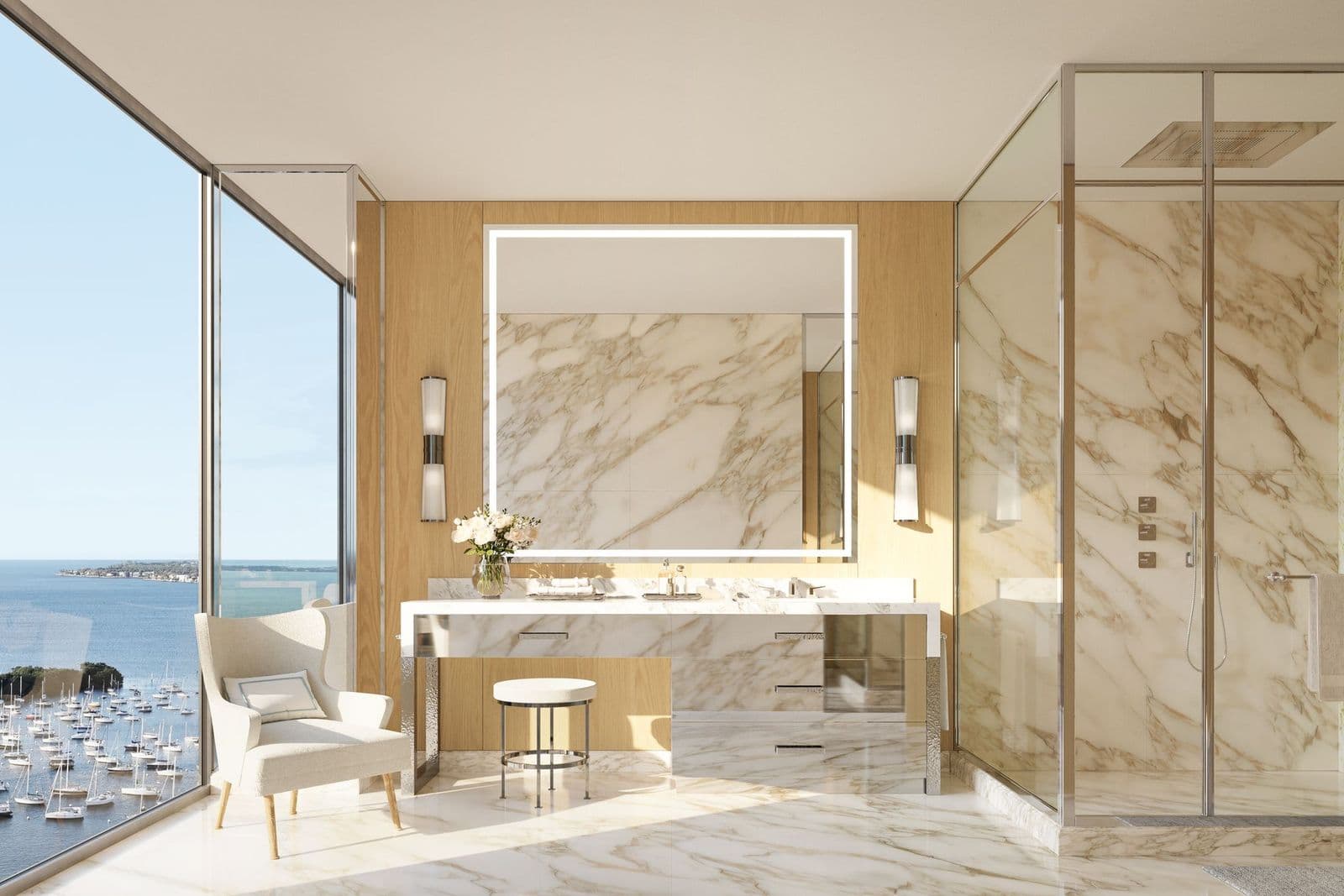
Four Seasons Coconut Grove | Courtesy of CMC Group and Fort Partners
For homeowners, choosing the right stone for interiors should involve carefully considering pattern, finish, scale, placement, and durability. The best results come from treating stone as part of the design process in the early stages, rather than as a surface selected at the end. We’ve provided some tips and designer insights to help you choose the right statement stone for your home.
Start With the Role the Stone Should Play
Before selecting a slab, think about the purpose you hope the stone will have in your space. Should it be a heavily veined marble that can serve as the focal point, or a softer limestone that quietly supports the surrounding architecture and furnishings?
At 520 Fifth Avenue, Charles & Co used stone as a grounding material across the building’s interiors. “We were intentionally restrained, using only a handful of stone types throughout the building, to create a sense of cohesion and quiet continuity,” says Katie Miller, Creative Director of Charles & Co. The sense of restraint is especially apparent in the primary bathrooms, where Laguna Verde marble adds color and personality while still feeling controlled.
In your interiors, integrate statement stone in your broader design plan to ensure that it enhances your living spaces and doesn’t contrast or compete with other colors, furniture, or finishes.
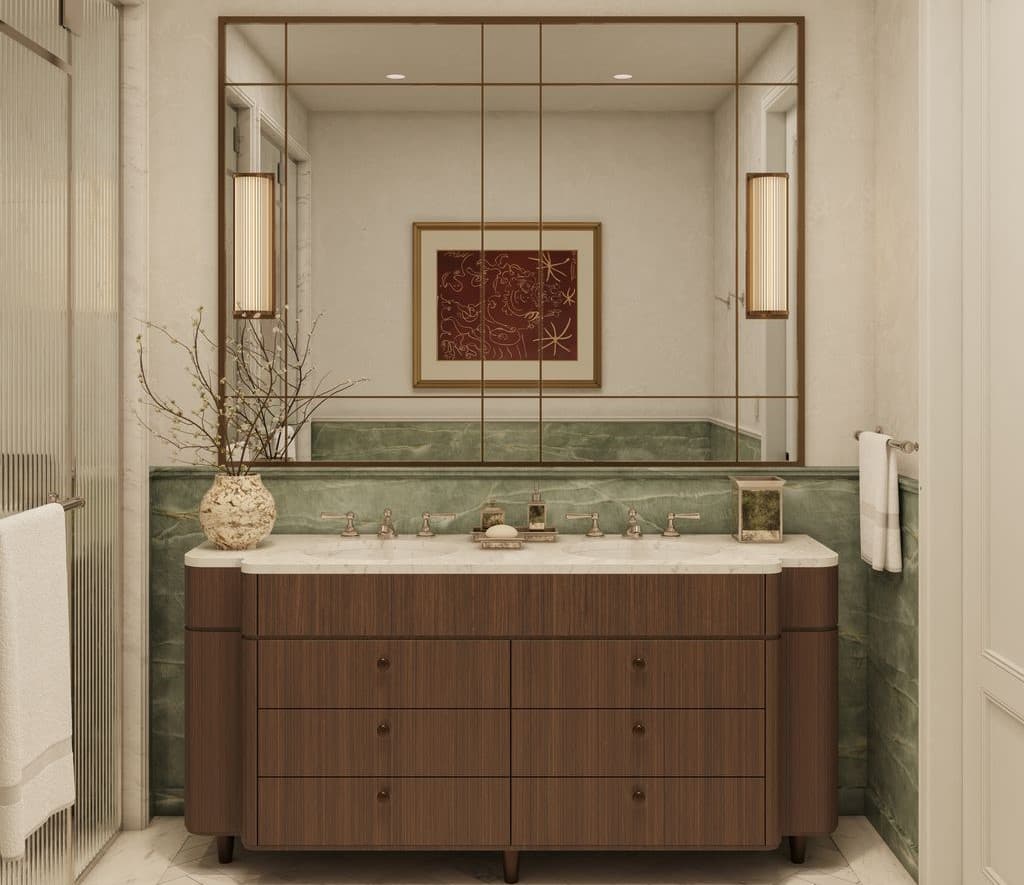
520 Fifth Avenue | Binyan Studios
SUBSCRIBE TO THE HAVEN MAILING LIST
Curated homes, market intelligence and design stories — a few emails a month.
No spam. Unsubscribe any time.
Look at the Full Slab, Not Just a Sample
It is difficult to judge stone from just a small sample. While a sample may show the general color, it rarely captures the veining, movement, mineral variation, scale, or fissures of the full material.
Seeing the slab in person helps answer several important questions: Is the veining too busy for the room? Does the color change under different light? Will the pattern work across a large island or wall? Are there natural markings that should be highlighted or avoided?
This step is particularly important when stone will span many surfaces. A slab that looks beautiful in isolation still needs to work when it is cut, joined, and installed.
Think About Performance Over Time
Statement stone needs to hold its value visually and functionally over time.
That was a priority at The Harper, where ODA selected Taj Mahal quartzite and Crema Luna limestone for areas including backsplashes, countertops, and kitchen islands. “When incorporating stone into a residential building, the first consideration is how it will continue to perform and attract as time passes,” says Ryoko Okada, Principal and Interior Design Project Director at ODA.
Some stones are better suited to high-use surfaces, while others require more maintenance. Marble, for example, can be beautiful and expressive, but it is more porous and more prone to etching than many quartzites. A homeowner who cooks often or wants a lower-maintenance kitchen may need a different material than someone choosing stone for a powder room or decorative wall.
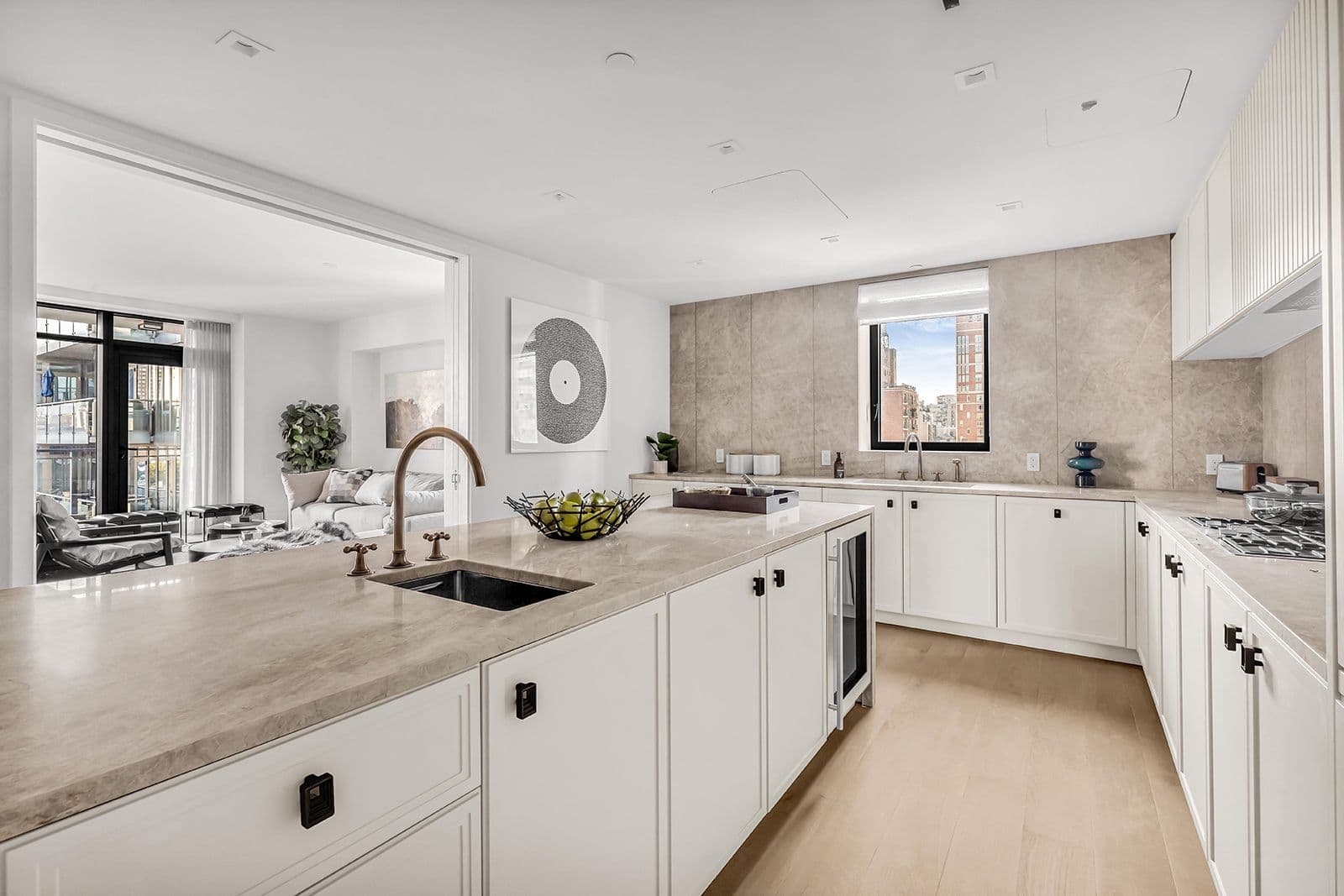
The Harper | Eitan Gamliely
Choose the Finish With the Room in Mind
A stone’s finish can change its entire mood. A polished finish reflects light and can make veining feel more dramatic. A honed finish has a softer, matte quality. A textured or leathered finish adds a more tactile surface and can feel less formal.
“The finish is just as important as the stone itself – it should balance beauty with functionality,” says Michele Bönan, Architect and Interior Designer of Michele Bönan Interiors.
At Four Seasons Private Residences Coconut Grove, Bönan used gold-veined marble in the bathrooms, where the finish helps the surface catch and reflect natural light. In that context, the finish plays a key role in how the room feels throughout the day.
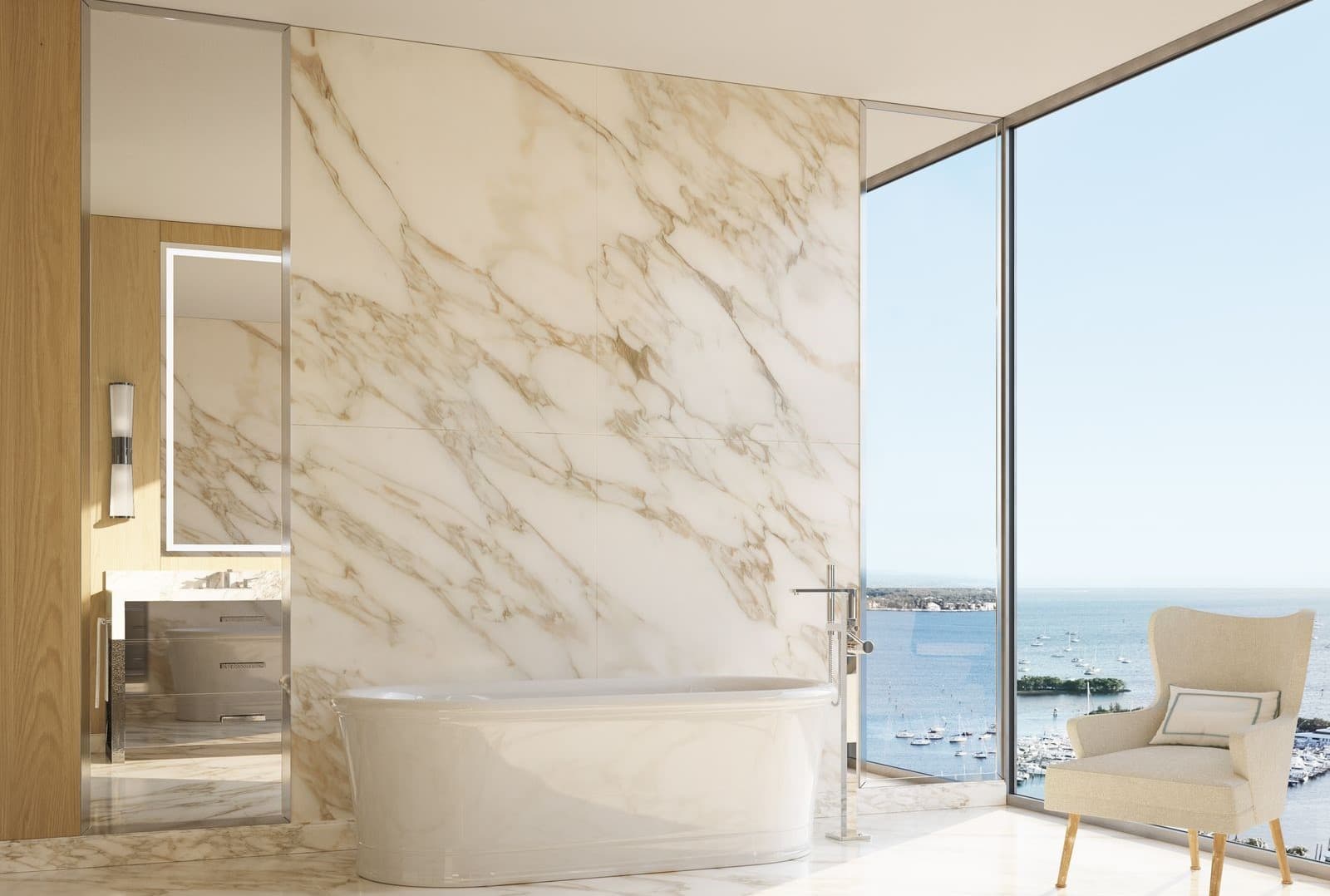
Four Seasons Coconut Grove | Courtesy of CMC Group and Fort Partners
Plan the Placement Carefully
Even a beautiful stone can feel excessive if it is used in too many places or installed without a clear plan. Placement determines whether the stone feels intentional or overwhelming.
A powder room can usually have a more dramatic presence because it is smaller and used differently, while a kitchen should have more balance. Meanwhile, an entry usually can support a more architectural use of stone because it sets the first impression.
Installation, related to aspects like seam placement, slab size, edge profiles, bookmatching, and transitions between surfaces, is also important. The direction of the veining matters, as does where the eye lands when entering the room. A countertop, backsplash, and island should feel connected rather than assembled from separate pieces.