


Vancouver, BC
Written by Breck Hapner
Canada’s inflation rate dropped to 2% in August, marking the lowest inflation rate since February 2021. According to a Financial Post article from September 17th, economists believe this reading from Statistics Canada’s Consumer Price Index (CPI) increases the probability of a 50-basis-point rate cut at the Bank of Canada’s (BoC) October meeting. This comes after the Canadian Real Estate Association (CREA) reported modest growth in the real estate market for August.
Much of the downward pressure on the CPI came from lower gas prices and base-year effects. Excluding gasoline, the CPI rose 2.2% in August, down from 2.5% in July, according to Statistics Canada’s CPI report. Major upward contributors to Canada’s inflation rate were mortgage interest costs, rent, car insurance, food purchased from restaurants, and property taxes. The main downward contributors included gasoline, phone services, women’s clothing, car prices, and computers. The BoC also looks at core inflation, with Statistics Canada data showing that the core median decreased from 2.4% to 2.3% and core trim fell from 2.7% to 2.4%.
SUBSCRIBE TO THE HAVEN MAILING LIST
Curated homes, market intelligence and design stories — a few emails a month.
No spam. Unsubscribe any time.
Bank of Canada Signals Possible Rate Cuts as Inflation Slows
This is good news for Canadian prices and points to potential BoC action. According to a September 17th Yahoo! Finance report, inflation has slowed to target “leaving the door open for more aggressive interest rate cuts.” A Bloomberg article from September 12th quoted the Canadian Imperial Bank of Commerce (CIBC) suggesting the BoC should “declare victory in the battle against inflation and get the economy moving again.” Also noting, “There’s no reason not to speed up the process of getting interest rates down materially.” The CIBC predicts that the BoC will cut rates by 50 basis points at both its December and January meetings.
Currently, the Canadian policy interest rate is 4.25%. Assuming a 25-basis-point cut in October and an additional 100-basis-point reduction between December and January, the rate could fall to 3%—just in time for the spring market. But in a September 12th Bloomberg Taking Stock video interview, CIBC Deputy Chief Economist Benjamin Tal says that the BoC may need to go even further, cutting by 150 basis points to avoid a recession: “The market is expecting the Bank of Canada to stop at about 2.75%, and I’m submitting that maybe the Bank of Canada will go below that in order to stimulate the economy.”


Québec, QC
Weakening Economy: The Price of Slowing Inflation
Tal discussed the economic issues facing Canada: “For young people aged 18 to 24, they are really struggling. The unemployment rate is 12%-13% . . . the labor market is not as inviting as it used to be by design. That’s exactly what the Bank of Canada would like to see, and that’s exactly why the Bank of Canada is starting to worry that maybe they did too much.”
The BoC wanted to see some weakness in the economy as a means of slowing inflation, which appears to be working. According to a September 17th Global News article, “Inflation is finally back at 2%. Is it the ‘light at the end of the tunnel’?” According to a September 14th article from Canadian Mortgage Trends, the CIBC forecasts a ‘supersized’ BoC rate cut by the end of this year. In a September 3rd Financial Post report, analysts predict that the BoC will proceed with significant and fast future cuts.
Impact of Rate Cuts on the Canadian Economy
What happens if the BoC proceeds with multiple rate cuts in a relatively short period? As aforementioned, inflation is down to 2.0%, but with an unemployment rate of 6.6%, as reported by the Financial Post on September 6th, the economy is weakening. If the BoC enacts “jumbo rate cuts” as the CIBC predicts, former BoC Governor Stephen Poloz suggested in a Bloomberg article on September 12th that there may be a case for cutting rates beyond the estimated midpoint where borrowing neither stimulates nor restricts economic growth. Although Poloz did not indicate a possible forthcoming recession, he stated, “We should be prepared for one, not pretend it can’t happen.”

White Rock, BC
Real Estate Market Impact of Rate Cuts and Stimulus Measures
How are economic forecasts affecting the real estate market? According to a September 16th Financial Post article, BoC Governor Tiff Macklem indicated that the “central bank will step up [the] pace of reductions should economic conditions worsen.” The Canadian government is also introducing measures to stimulate the 2025 real estate market. According to a September 16th Toronto Star article, “first-time buyers across Canada and any purchasers of newly built homes will soon be able to stretch their mortgages out an extra five years,” along with 30-year mortgage amortizations and reduced down payments—actions that may “put the dream of home ownership in reach for more young Canadians.”
Will Demand Return to the Real Estate Market?
Are there clear signs that demand could return to the real estate market next year? A Financial Post article from September 13th reported that Poloz expressed concern about rising unemployment and the looming “most stressful leg of [the] mortgage renewal cycle,” which could impact consumer spending. How will the Canadian housing market perform if the economy contracts?
Experts agree that there is much uncertainty surrounding Canada’s 2025 housing market. According to CREA’s September 16th monthly housing market report, the benchmark home price fell slightly from $717,500 in July to $717,400 in August, while the average home price dropped by $17,000, though it remains $1,000 higher than a year ago.
Flat Home Sales and CREA’s Forecasts for 2025
What about Canadian home sales? Were the previous 50 basis points of rate cuts, along with the recent 25-basis-point cut on September 4th, enough to quell fears over a recession and bring buyers back to the market? According to CREA Economist Shaun Cathcart, “The bigger picture is a market that’s still stuck in the same holding pattern it’s been in since the beginning of the year.” However, the CREA report shows sales were up 1.3% month-over-month (MoM), with 468,876 homes sold in August—a marginal increase of 868 from July, providing some seemingly positive news.
That said, CREA’s optimism pervaded earlier forecasts. In a March 18th Global News article, CREA stated that “slow February home sales signal things are about to pick up.” In an April 12th report by The Globe and Mail, CREA expected home prices to climb 4.9% in 2024. And a July 12th Storeys article highlighted “Signs of life in [the] Canadian Housing Market,” and quoted Cathcart, who noted that, “Canada’s housing numbers did perk up a bit on a month-over-month basis in June following the first Bank of Canada rate cut.”


Mont-Tremblant, QC
Can Rate Cuts Spur a 2025 Market Resurgence?
In the latest video, Cathcart goes on to say, “The overall forecast is for a return of a more vibrant housing market in the next year. Call it a lock, call it a sure thing, call it a slam dunk . . . it’s going to happen.” If the Canadian economy continues to weaken, it’s likely that the BoC will implement additional rate cuts, as the bank remains concerned that “the labour market is pointing to some downside risks,” as reported by the Financial Times in a September 14th article. While the CREA assessment doesn’t address the current economic backdrop, as previously mentioned, Poloz has warned of a potential recession, noting that the rate cuts aren’t happening in isolation. He noted that the unemployment rate is now “close to around two percentage points above the low point,” which often signals an impending recession. Though many experts, like Tal, forecast stability rising from further rate cuts, it’s important to recall Tal’s assertion that the BoC would further cut rates “to stave off recession.”
How Does the Housing Market Fare During Recessions?
According to an August 22nd CTV report, historical data from the two most recent recessions during which the BoC dropped rates to near zero—2008 and 2020—shows mixed outcomes. In 2008, home prices declined, while in 2020, they increased. In a December 2023 report, TD Economics noted that during the 1990s recession, “home prices plunged by 32% over 7 years across Ontario.” And during the 1980s recession, according to a Canadian Centre for Policy Alternatives (CCPA) report from August 2010, home prices dropped both during and after that recession. So, despite interest rate cuts during four major recessions, house prices fell in three of them.
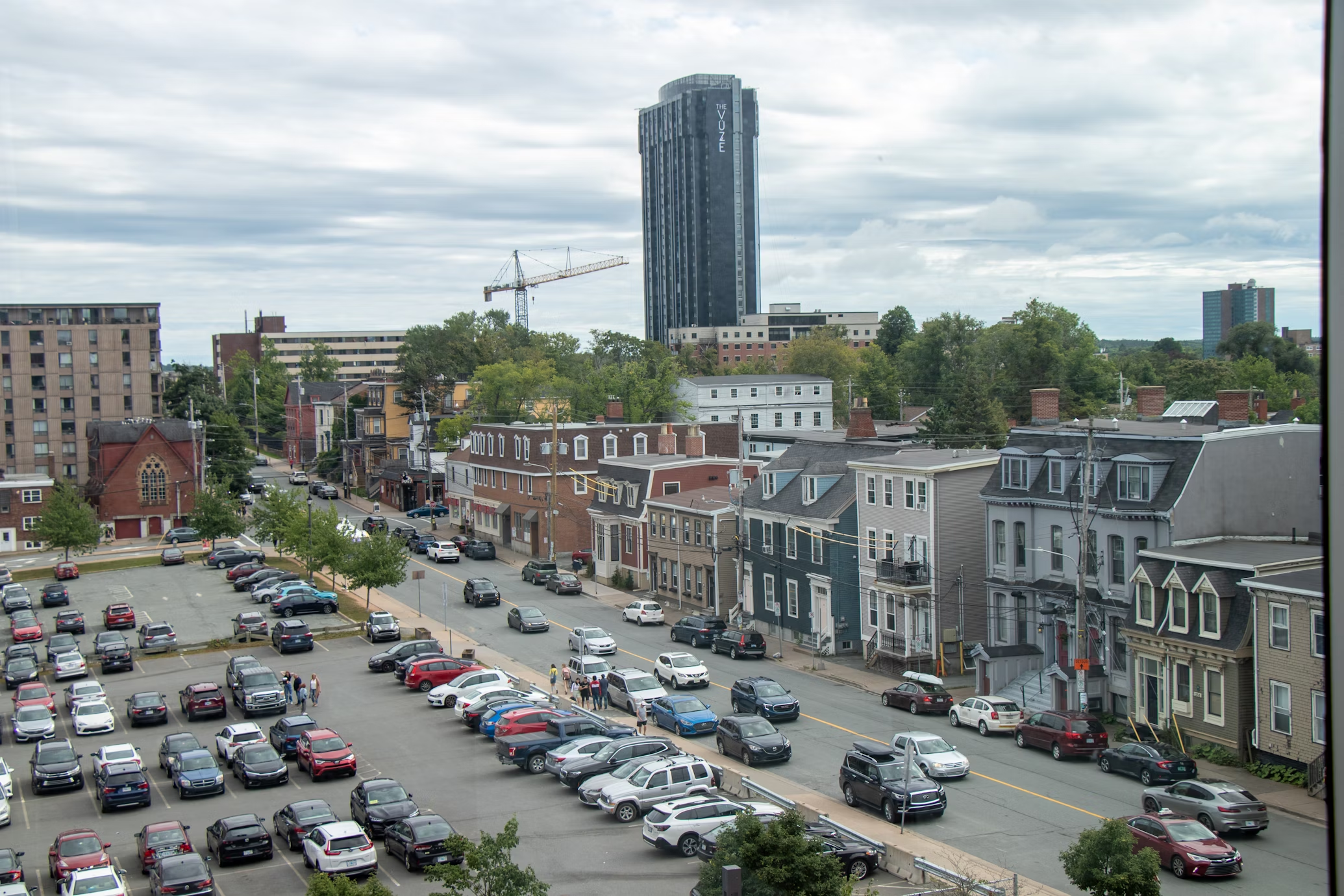
Halifax, NS
Tight Housing Supply: A Key Factor for 2025’s Housing Outlook
Another factor in the 2025 housing outlook is inventory. According to a 2023 Fraser Research report, population growth has outpaced housing completions in recent years. A May 12th, 2021, Scotiabank report also pointed out that Canada has the lowest housing supply among the G7 countries. This low supply could help sustain home prices even if Canada enters a recession. While CREA’s prediction of a market resurgence in 2025 is optimistic, history suggests that this outcome isn’t guaranteed. There is demand for housing, fueled by new federal government rules taking effect December 15th, as outlined by Global News in a September 16th article, but it’s uncertain how much this will translate into increased sales amid a weakening economy.
The Current Bottom Line
Looking ahead to 2025, Canada’s housing market finds itself at a crossroads. Though inflation has been contained and more rate cuts seem likely, the broader economic backdrop presents significant challenges. High unemployment, a slowing economy, and looming recession risks may counterbalance the effects of lower borrowing costs. While government policies aimed at stimulating housing demand offer some hope, it’s unclear whether they will be enough to offset the broader economic weaknesses.
Ultimately, the interplay between rate cuts and economic growth will determine the future of the Canadian housing market. With experts divided on how aggressive the BoC’s cuts should be, and historical data showing that real estate doesn’t always thrive during recessions, the outlook remains uncertain. The next few months will be crucial in determining whether CREA’s forecast of a housing resurgence holds or if economic struggles will stall the recovery.

Vancouver, BC
In our next article, HAVEN will take a further look at the numbers: how Canada’s housing market is reacting to prevailing economic factors influencing real estate.