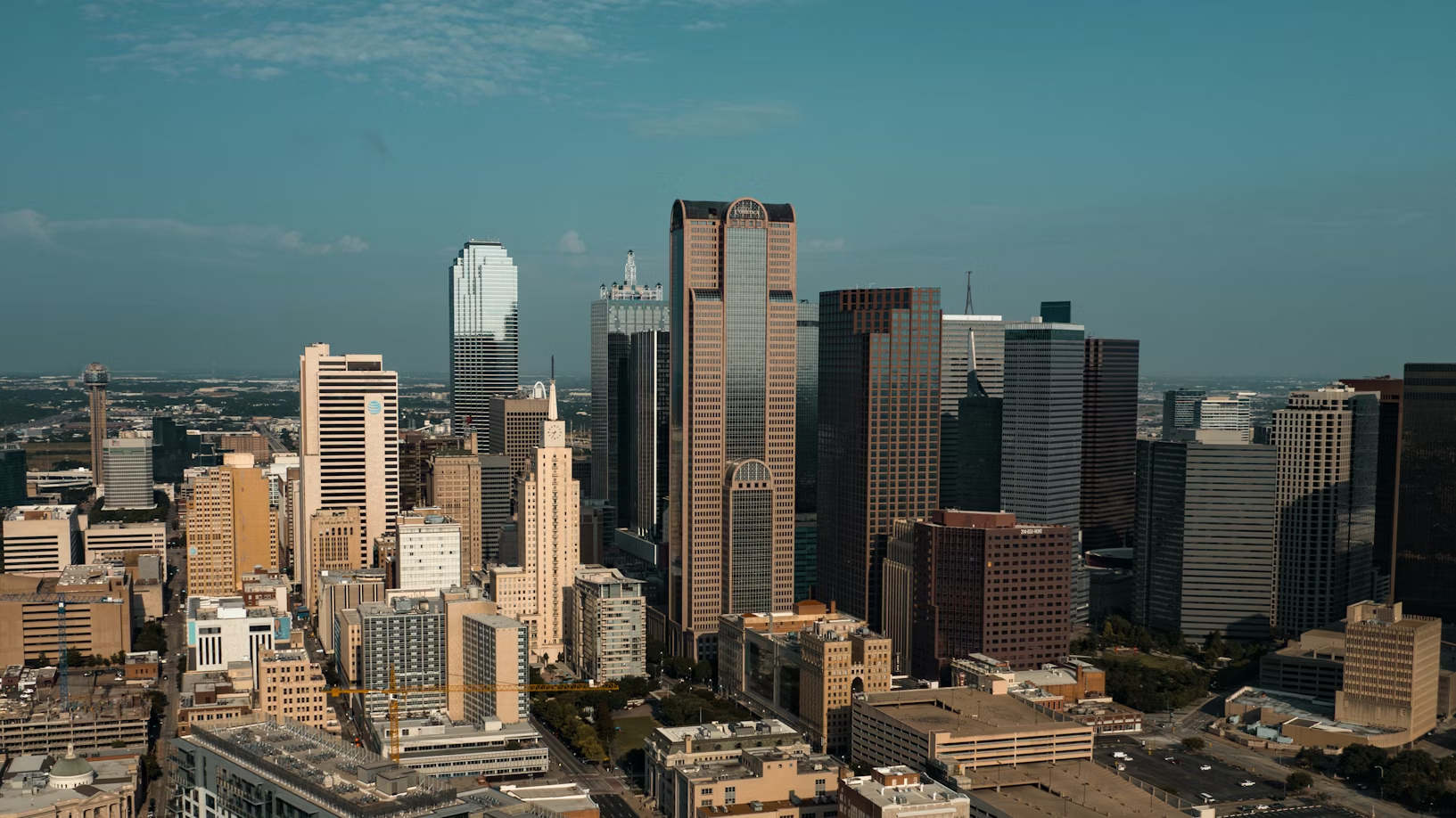
Dallas, Tx
The Dallas–Fort Worth real estate market continues to stand out nationally as it heads into 2026. In its most recent Emerging Trends in Real Estate report, PwC and the Urban Land Institute ranked Dallas/Fort Worth as the top U.S. real estate “market to watch”, citing the region’s economic resilience, sustained population growth, and relative affordability compared to many major coastal metros.
Throughout this year, DFW remained a destination for both corporate relocation and domestic migration. The region’s diversified economy—anchored by technology, finance, healthcare, logistics, and manufacturing—helped support job growth even as national housing markets adjusted to higher interest rates and shifting demand. This stability continued to underpin housing activity across the metroplex, even as market dynamics evolved.
Inventory and Pricing Dynamics
As the year closes, the DFW housing market has shifted away from the extreme seller-leaning conditions of recent years and into a more normalized phase. Inventory levels increased across much of the metroplex, easing the supply constraints that defined earlier cycles and giving buyers more options than they’d had in years. At the same time, price growth moderated following several years of rapid appreciation, reflecting a broader market recalibration rather than a reversal.
This shift was felt consistently across many submarkets. As Ashley Moss of Moss Residential noted, “The most notable trend I saw in 2025 across the DFW market was a clear increase in inventory paired with a slowdown in overall sales.” Homes spent more time on the market, changing expectations for sellers who had grown accustomed to faster absorption in prior years.
Buyer behavior evolved in tandem with these conditions. Moss observed that “buyers have shifted to a very value-driven mindset—they’re patient, selective, and still hoping for either home prices or interest rates to come down before making a move.” As a result, pricing became more sensitive to location, condition, and overall value proposition.
One of the clearest indicators of this adjustment was a widening gap between asking and sold prices, particularly at higher price points. Moss pointed out that “the asking-versus-sold gap is widening across all price points, revealing a market adjustment many agents avoid discussing.” This dynamic underscored the growing importance of realistic pricing in a higher-rate environment.
SUBSCRIBE TO THE HAVEN MAILING LIST
Curated homes, market intelligence and design stories — a few emails a month.
No spam. Unsubscribe any time.
Builder Activity and New Construction
New construction remained a cornerstone of the DFW housing market this year, particularly in fast-growing suburban corridors. Builders continued to deliver new inventory, though higher costs for labor, materials, and land encouraged more measured expansion. As resale inventory increased, competition intensified, reinforcing a market-wide emphasis on value, efficiency, and strategic pricing.
What to Expect in 2026
Heading into 2026, market conditions suggest continued normalization rather than renewed volatility. Inventory levels point toward conditions that increasingly resemble a more evenly balanced market, with neither buyers nor sellers holding the decisive leverage seen in recent cycles.
Moss echoed this outlook, noting that “as we approach 2026, buyers and sellers should expect a continued trend toward a more balanced, normalized market.” Value is likely to remain the defining theme, with well-priced, well-maintained homes continuing to stand out amid more deliberate buyer decision-making.
Overall, the DFW housing market approaches 2026 with sound fundamentals. Ongoing population growth, a broad employment base, and relative affordability compared with many coastal markets continue to support long-term demand. After years of constrained supply and accelerated appreciation, the shift toward balance reflects a healthy maturation—one that increasingly rewards informed decisions, realistic expectations, and long-term perspective.