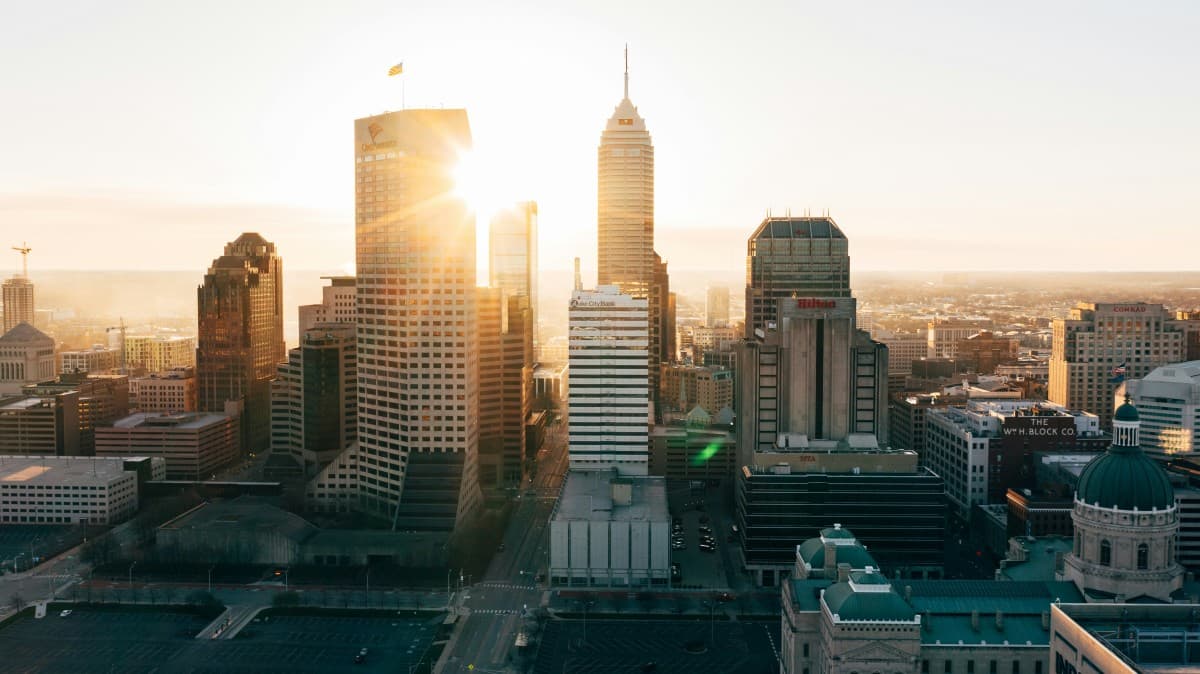
Indianapolis, IN
Across Ohio and Indiana, the 2026 conversation is less about one breakout ZIP code and more about downtown areas and neighborhoods that combine livability with price points that still feel comparatively workable for many buyers. These five markets stand out for their mix of employment bases, revitalized districts, and everyday amenities like restaurants, parks, and walkable pockets.
1. Indianapolis, IN
Indianapolis is getting national attention as a buyer-friendly market this year. In Zillow’s ranking of the most buyer-friendly large metros for the year, Indianapolis sits at No. 1, reflecting conditions Zillow associates with stronger negotiating leverage and better odds of finding homes within budget. Beyond the headline, the appeal is practical: a city with a strong downtown and distinct neighborhoods that support different lifestyles—from sports-and-arts weekends to quieter, family-oriented blocks—without requiring a coastal market price tag to participate.
SUBSCRIBE TO THE HAVEN MAILING LIST
Curated homes, market intelligence and design stories — a few emails a month.
No spam. Unsubscribe any time.
2. Cleveland, Ohio
Cleveland’s draw is its mix of character and access—lakefront energy, a dense set of cultural institutions, and neighborhoods with restored housing stock and local businesses. Areas like Ohio City and Tremont continue to anchor the lifestyle conversation for buyers who want historic architecture and a strong independent dining scene, while downtown destinations like the Rock & Roll Hall of Fame keep the city’s visitor economy and cultural profile active. For real estate, Cleveland is often framed as a market where buyers can still find space and architectural detail—especially compared to higher-cost metros—while staying close to urban amenities.
3. Columbus, Ohio
Columbus continues to stand out as Ohio’s capital and largest city, with an economy that’s broadly supported by education, healthcare, technology, and government—diversity that tends to translate into steady housing demand. Lifestyle-wise, it’s a city of distinct neighborhoods: the Short North Arts District for galleries, dining, and nightlife; German Village for brick streets and historic character; and the Arena District for sports and big-event energy. For buyers who want walkable pockets, strong amenities, and a more “city” feel without coastal pricing, Columbus stays firmly on the 2026 watch list.


4. Fort Wayne, IN
Fort Wayne is a smaller-city market that has been investing heavily in quality-of-life infrastructure—especially downtown. The city’s Riverfront Development efforts have been expanding public-space amenities along the rivers, reinforcing the idea of downtown as a place to spend time, not just pass through. For buyers, the value proposition is straightforward: a community scale that can feel easier day-to-day, paired with visible reinvestment and an improving “weekend ecosystem” of parks, events, and local businesses—often at a lower entry point than larger Midwest hubs.
5. Dayton, Ohio
Dayton’s appeal this year sits at the intersection of history and reinvention: a city with deep aerospace and manufacturing roots, plus a downtown that has been steadily adding more reasons to visit—restaurants, gathering places, and adaptive reuses that make the core feel more activated. One example of that reuse story is The Silos, a repurposed historic-silo site that opened as a food-hall/beer-garden style destination near 2nd Street Market, reflecting the broader trend of experience-driven downtown revitalization. In housing terms, Dayton remains a market many buyers look at for character homes without the pressure of top-tier pricing.