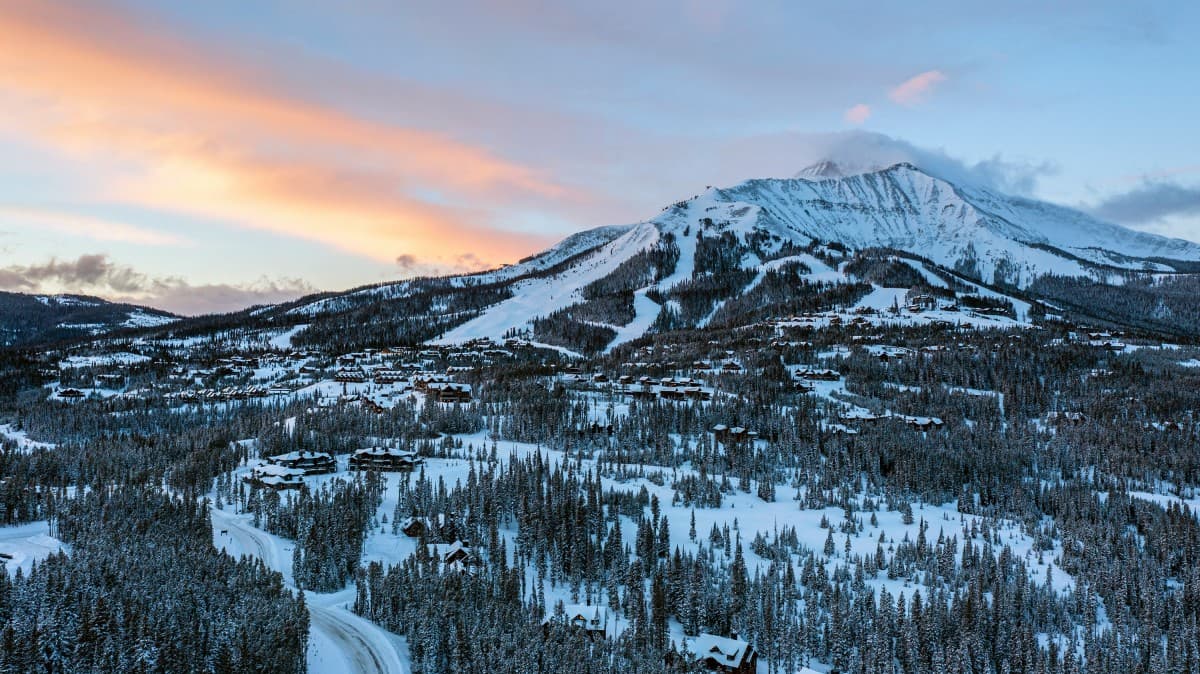
Big Sky, MT
Heading into the 2026–27 ski season, buyers are getting more time in parts of the Mountain West without seeing widespread price declines. Montana stands out, with Big Sky, MT, and Bozeman, MT, properties taking longer to find buyers and many August sales closing below their original asking prices. Park City, UT, Sun Valley, ID, and Jackson Hole, WY, have been firmer, with stronger overall activity, rising prices, or limited inventory supporting their markets.
Park City: Condos Lag a Stronger Overall Market
Park City remains active overall. In the latest quarterly report from the Park City Board of REALTORS®, second-quarter transactions increased 10% from a year earlier, while total sales volume rose 7% to nearly $1.36 billion.
Condominiums have been softer. Over the 12 months ending June 30, condo transactions fell 14% and sales volume declined 7%, while single-family transactions increased 8%. The broader market remains active, but condo sales have lost some momentum compared with single-family homes.
SUBSCRIBE TO THE HAVEN MAILING LIST
Curated homes, market intelligence and design stories — a few emails a month.
No spam. Unsubscribe any time.
Big Sky and Bozeman: More Time to Make a Deal
The most pronounced change is in Big Sky. According to Bozeman Real Estate Group’s August market report, August listings took a median 134 days to go under contract, compared with 25 days a year earlier. Of the 18 properties that sold during the month, 14 closed below their original asking price.
Big Sky is a small market, so monthly median prices can move sharply depending on which properties sell. The longer contract timeline and prevalence of below-asking sales say more about current negotiating conditions than one month’s price change.
Bozeman is also moving more slowly. Bozeman Real Estate Group’s August market report states that the median time from listing to contract increased from 30 days last August to 50 this year, and 72 of 105 August sales closed below their original asking prices. Price performance depended heavily on property type: the single-family median increased 2%, while the condo median fell 8%.
In both Bozeman and Big Sky, buyers are getting more time to make a decision than they did last year.
Sun Valley: Higher Prices Despite More Activity
According to market data published by Sun Valley Real Estate, across Blaine and Custer counties, 443 properties sold through August, 12% more than during the same period in 2025. The year-to-date median price reached $925,000, up 9%, while total dollar volume increased 22%.
August alone produced a $1.1 million median sale price, although monthly figures in a relatively small resort market can be influenced heavily by the properties that happen to close. The year-to-date numbers provide the more useful view: more homes have sold, and they have done so at higher prices overall.
Jackson Hole: Luxury Sales Still Shape the Numbers
Jackson Hole remains defined by scarcity and expensive transactions. The Jackson Hole Real Estate Report’s midyear 2026 analysis shows that inventory increased 8% during the first half of this year but remained well below historical norms. The median sale price reached a record $2.995 million.
Luxury sales have an especially large effect on the market. They represented 15% of first-half transactions but accounted for roughly 45% of total dollar volume. The same midyear report found no homes listed below $1 million, illustrating how little lower-priced inventory is available even after the overall listing count increased.
What to Watch Before Ski Season
Big Sky and Bozeman will provide an early indication of whether August’s longer selling times persist once ski-season demand returns. If they do, buyers in those markets could retain some of the negotiating room visible at the end of summer.
Park City enters fall with condo transactions down over the prior 12 months, while Jackson Hole has slightly more inventory but little at lower price points. Sun Valley reached September with year-to-date sales and prices both ahead of 2025, leaving little evidence so far of broader price weakness.