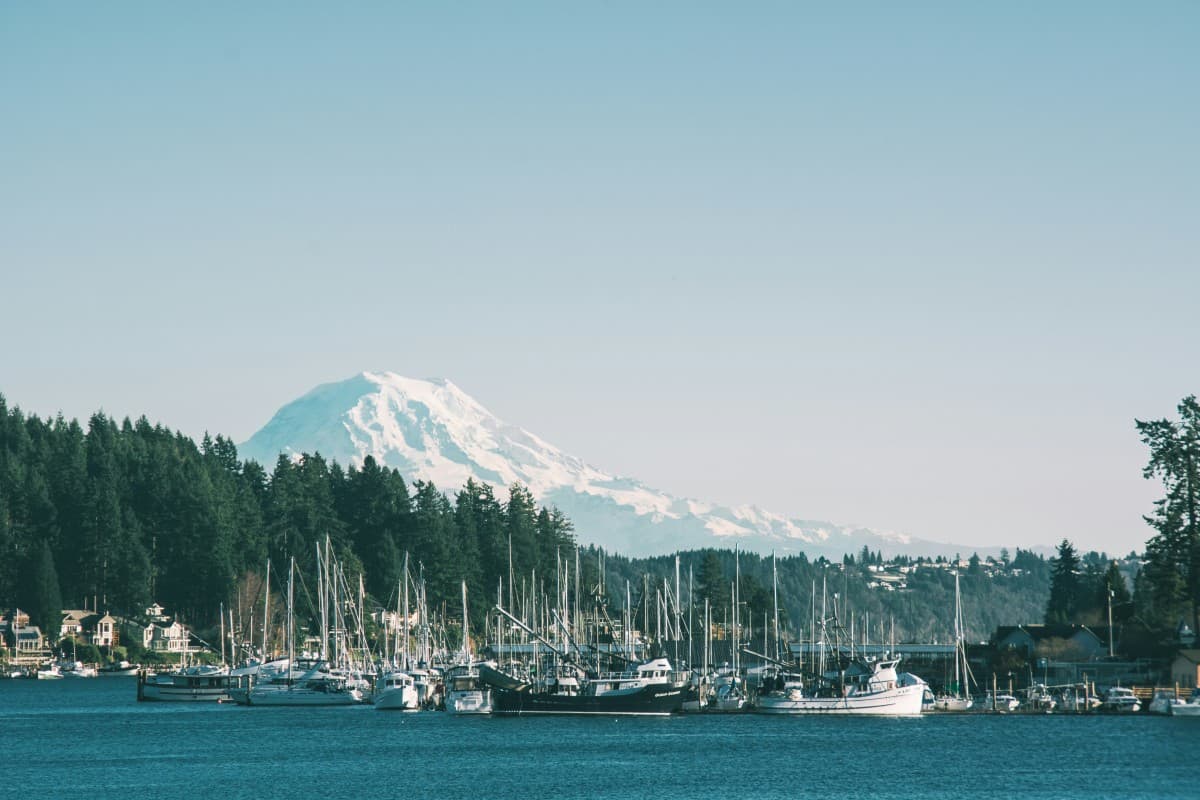
Gig Harbor, WA
Heading into 2026, these five Washington markets stand out as areas poised for the next phase of Washington’s evolving real estate environment.
1. Tacoma
Tacoma has moved firmly into the spotlight as one of Washington’s most dynamic growth markets. Long anchored by its port and industrial base, the city has spent the last decade reshaping its identity through waterfront redevelopment, residential infill, and cultural investment. The result is a more walkable, urban-oriented environment that appeals to both commuters and residents who work locally.
Relative affordability compared to Seattle remains one of Tacoma’s strongest draws, particularly for buyers seeking character homes, renovated historic neighborhoods, and emerging mixed-use districts. Demand continues to center around downtown, the Stadium District, and waterfront-adjacent areas, where infrastructure improvements and commercial growth are reshaping long-term value.
SUBSCRIBE TO THE HAVEN MAILING LIST
Curated homes, market intelligence and design stories — a few emails a month.
No spam. Unsubscribe any time.
2. Spokane Valley
Spokane Valley represents one of eastern Washington’s most consistent residential growth zones. Positioned outside Spokane’s urban core, it offers newer housing stock, suburban convenience, and access to regional employment centers without the density of larger metros.
The area continues to attract families, healthcare workers, and remote professionals drawn by comparatively lower home prices and a stable local economy. New construction remains a defining feature of the market, with planned communities and modern housing inventory supporting steady demand. While appreciation has been more measured than in western Washington, long-term population growth keeps Spokane Valley firmly on the radar.
3. Gig Harbor
Gig Harbor occupies a unique position in the South Sound—a true waterfront town with a defined harbor, strong community identity, and limited developable land. The market here is shaped less by volume and more by scarcity. Inventory remains tight, particularly for properties with direct water access or harbor views.
Buyer interest is driven primarily by lifestyle: boating, walkable village districts, and proximity to both Tacoma and the Key Peninsula. While price points reflect the town’s exclusivity, Gig Harbor still offers relative value when compared with waterfront communities closer to Seattle’s core. Long-term demand remains closely tied to its preserved character and natural setting.


4. Bothell
Bothell has evolved into one of the Puget Sound region’s most strategically positioned suburban markets. Located at the intersection of Snohomish and King Counties, the city benefits from proximity to major tech campuses in Redmond, Kirkland, and north Seattle, while maintaining a family-oriented residential profile.
Downtown redevelopment, park investment, and a growing retail and dining scene have strengthened Bothell’s appeal among professionals and young families. Housing demand remains steady, supported by strong schools and access to employment corridors. New construction and townhome developments continue to play a key role in shaping the city’s housing mix.


5. Lacey
In the southern Puget Sound, Lacey offers a more understated but highly stable market anchored by state government employment and regional healthcare. Its position within the Olympia metropolitan area provides economic resilience that tends to soften market volatility.
Lacey attracts buyers seeking attainable pricing, suburban livability, and long-term reliability. Steady migration into the capital region, paired with controlled residential development, supports gradual appreciation and sustained transaction volume. For investors and buyers focused on stability over speed, Lacey remains a market worth watching.