
“Corn Cob“ Towers, Marina City
Chicago is home to some of the most striking architecture in the world, and Marina City is no exception. Known affectionately as the “Corn Cob” Towers, Marina City is one of the city’s most iconic landmarks. With its distinctive cylindrical design and prime riverfront location, Marina City stands as a testament to Chicago’s architectural ingenuity and rich history.
This blog explores the fascinating style and history of Marina City, unpacking its significance in modern architecture and its enduring influence on urban living. Whether you’re an architecture enthusiast, a prospective Chicago homeowner, or simply curious about the story behind this renowned development, here’s everything you need to know about Marina City.
A Vision of Urban Living in the 1960s
Marina City was conceived at a time when urban flight was drawing people away from city centers to the suburbs. The mid-20th century saw American cities grappling with population loss, and Chicago was no different. Architect Bertrand Goldberg envisioned Marina City as a way to revitalize downtown living and attract people back to the city by innovating apartment living.
Completed in 1967, the two iconic cylindrical towers were part of a “city within a city” concept. Marina City was designed to offer everything its residents could want in one location—including housing, entertainment, parking, and access to the Chicago River. At the time, it was a revolutionary take on urban life and one of the first mixed-use developments in the United States.
SUBSCRIBE TO THE HAVEN MAILING LIST
Curated homes, market intelligence and design stories — a few emails a month.
No spam. Unsubscribe any time.
Innovating Urban Architecture
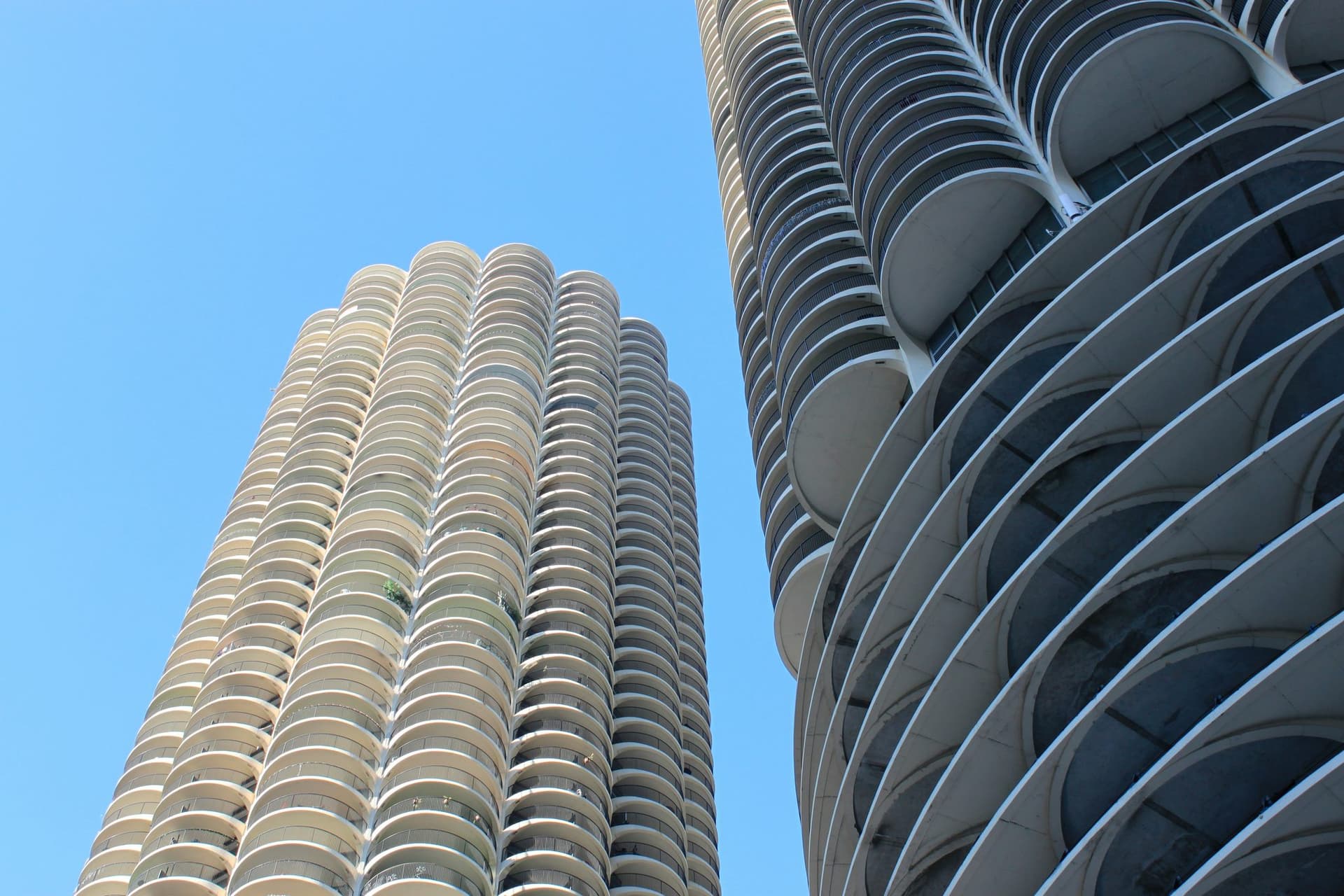
Bertrand Goldberg broke away from the rigid, box-like designs of the International Style architecture dominating the mid-20th century. Instead, he opted for soft, organic forms inspired by nature. The towers’ cylindrical design and petal-like balconies mimicked the shape of corncobs, giving Marina City its affectionate nickname.
Functionally, the circular design was intended to maximize living spaces while creating a striking visual statement that would distinguish the complex from Chicago’s more traditional skyline. This bold experiment in form and function quickly became a symbol of architectural innovation.
Architectural Features That Define Marina City
The Distinctive Cylindrical Design
The most obvious and unique feature of Marina City is its cylindrical form. Each of the towers comprises 65 stories, most of which are dedicated to residential units. What sets these towers apart from other skyscrapers is the scalloped edge of their balconies. Every apartment or condo at Marina City has a semicircular balcony that extends outward, offering residents breathtaking, panoramic views of the Chicago River, downtown skyline, and Lake Michigan.
Mixed-Use Spaces
Marina City wasn’t just about residential living. Goldberg’s vision included a space where residents could live, work, and play without needing to leave the premises. The base of the towers includes multiple amenities:
– A parking garage that spirals upward like a coiled spring, capable of holding up to 896 vehicles.
– Restaurants, shops, and offices that promote convenience and liveliness.
– Public spaces for events and entertainment, fostering community among residents and visitors.
Marina Life Meets Modern Living
True to its name, Marina City offers direct access to the Chicago River. The towers were built with an adjoining marina, giving residents the unique opportunity to dock boats right outside their homes. This feature makes Marina City not just a part of Chicago’s architectural heritage, but also an active component of its vibrant river life.
A Pioneer in Vertical Density
Marina City pioneered the concept of vertical density, demonstrating how high-rise living could offer residents the same comfort and versatility as suburban living. Its groundbreaking design influenced countless mixed-use developments around the world.
Marina City’s Cultural Impact
Marina City has been more than a landmark; it has become an integral part of popular culture. The towers have made appearances in numerous films, television shows, and advertisements, cementing their status as icons of Chicago living.
Famous examples include:
– The Blues Brothers (1980), where a memorable car chase culminates with a dramatic plunge from the parking garage of one of the towers.
– The towers’ repeated use in promotional imagery for the city of Chicago in magazines, travel brochures, and postcards.
– The cover of Wilco’s album, “Yankee Hotel Foxtrot,” which features a striking photo of Marina City, further spreading its fame beyond architectural circles.
Over the decades, Marina City has become synonymous with modern living and artistic expression. Its cultural significance rivals its architectural legacy, making it a favorite for both filmmakers and artists.
Marina City in the Modern Era
Fast-forward several decades, and Marina City remains as popular and relevant as it was when completed. Its timeless design continues to attract residents who value its unique architecture and unbeatable location. Recent restoration efforts have ensured that the towers remain structurally sound and visually compelling, maintaining their place in the Chicago skyline.
Additionally, the focus on sustainability and maximizing space resonates with modern values. Marina City’s design proves that architecture can be both beautiful and functional, a concept that has inspired architects globally.
Why Marina City Endures
What makes Marina City so enduringly appealing? Beyond its iconic design, the development represents a forward-thinking approach to urban living. Even in 2024, many cities look to Marina City as a pioneering model for creating self-sufficient, livable spaces in bustling downtown areas.
What It’s Like to Live in Marina City
Living in Marina City offers a one-of-a-kind experience. Residents enjoy:
– Proximity to downtown Chicago’s attractions, including the theater district and world-class shopping.
– Quick access to public transport and nearby business hubs.
– The ability to enjoy recreational activities like kayaking and fishing along the Chicago River.
Fun fact for architecture enthusiasts: A tour of Marina City is a must-do in Chicago, as it offers an up-close look into the innovative design of Bertrand Goldberg.
Lessons from Marina City
The story of Marina City teaches architects, urban planners, and developers crucial lessons:
– Innovate Fearlessly: Instead of conforming to established norms, Marina City set a precedent for the forward-thinking projects we see today.
– Prioritize Functionality: The complex isn’t just visually stunning but extremely practical, enhancing daily life for its residents.
– Create Community-Centric Design: Incorporating spaces for work, leisure, and social interaction ensures that urban spaces are vibrant and self-sustaining.
Whether you view Marina City as a bold architectural statement or a paradigm-shifting urban development, it is hard to overstate its impact on modern architecture.
Architecture Meets Timeless Design - Be Inspired
Marina City is more than just a pair of towers; it’s a symbol of ingenuity and aspirational living. A visit to this iconic Chicago complex is an invitation to marvel at architecture’s potential to foster meaningful connections among people and places.
Curious to explore Marina City up close? If you’re passionate about architecture or real estate, start with a guided tour of this masterpiece. Explore its design and lifestyle firsthand, and see why it has shaped both Chicago’s skyline and the concept of urban living worldwide.