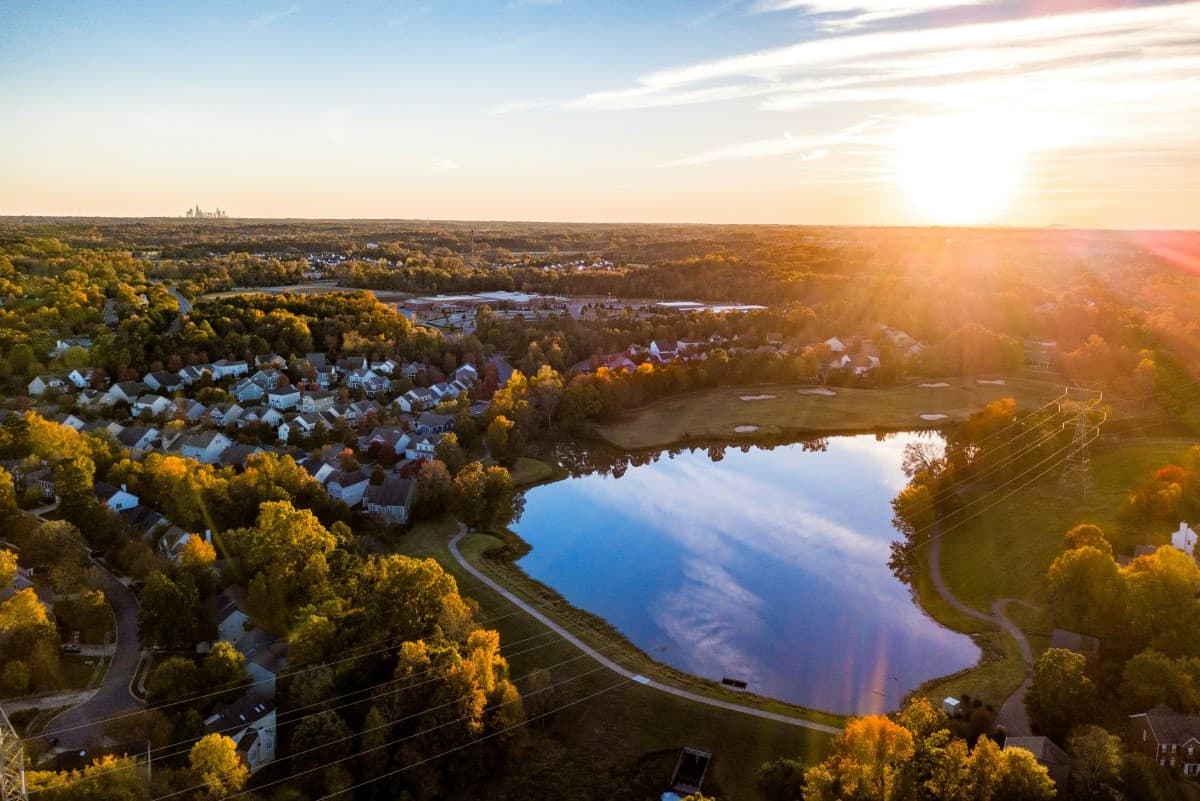
Charlotte, NC
The past year marked a noticeable shift for North Carolina’s real estate market. After several years defined by rapid price growth and intense competition, 2025 introduced a calmer, more deliberate pace. The urgency that once drove decisions gave way to a market where buyers had time to evaluate options and sellers had to align expectations with a more balanced reality.
Across much of the state, home values largely held steady rather than continuing the sharp upward climb of prior years. Inventory improved from the extreme lows of the early 2020s, even though many areas remained tighter than long-term norms. Homes also spent more time on the market. Negotiation returned as a standard part of the process, signaling a healthier relationship between supply and demand.
The Triangle region—Raleigh, Durham, and Chapel Hill—captured this transition clearly. New listings increased over the course of the year, giving buyers genuine choice after years of scarcity. Rather than competing in fast-moving bidding wars, many purchasers were able to compare neighborhoods, inspect properties more carefully, and move forward with greater confidence.
SUBSCRIBE TO THE HAVEN MAILING LIST
Curated homes, market intelligence and design stories — a few emails a month.
No spam. Unsubscribe any time.
Elsewhere, the story was more varied. Charlotte and its surrounding communities remained active, supported by continued job growth and corporate investment. Coastal markets, particularly around Wilmington and along the southern shoreline, continued to attract both lifestyle-driven buyers and long-term investors. Waterfront access, limited land availability, and second-home demand kept these areas competitive even as the broader market slowed.
Population growth remained one of North Carolina’s most powerful forces in 2025. The state continued to draw new residents from higher-cost regions, helping sustain housing demand despite elevated mortgage rates. That steady migration underscored the long-term appeal of North Carolina’s mix of career opportunity, affordability relative to other growth states, and geographic diversity.
Looking ahead to 2026, the outlook is steady rather than dramatic. Mortgage rates remain the primary unknown. Even modest easing could bring more buyers back into the market, particularly those who paused plans over the past year. At the same time, most signs point toward continued balance rather than a return to the frenzied conditions of the early 2020s.
Infrastructure investment and development patterns are also expected to shape the next phase of growth. Transportation projects, suburban expansion, and mixed-use development continue to reshape both urban and secondary markets, potentially broadening where buyers are willing to look.
Beyond the mechanics of the market, lifestyle demand remains central to North Carolina’s appeal. In 2025, buyers continued to prioritize community, access to nature, and overall quality of life alongside price and location. From mountain towns to coastal communities to fast-growing urban centers, the state’s range of living environments continues to set it apart.
The way people approach housing decisions has also matured. The pandemic-era focus on maximizing interior space has evolved into a broader view that includes walkability, outdoor access, cultural amenities, and long-term livability. North Carolina’s established cities and diverse landscapes place it well within that shift.
As the state moves into 2026, its housing market appears grounded and navigable. For buyers, the coming year is likely to offer more choice and fewer pressure-filled decisions. For sellers, preparation and realistic pricing will matter more than speed alone.
What emerged in 2025 was not a downturn, but a reset. And as North Carolina heads into its next chapter, the fundamentals that have driven its growth for decades—population gains, economic diversity, and a lifestyle that spans coast, city, and countryside—remain firmly in place.